Showing posts with label Coronary Heart Disease. Show all posts

Friday, 4 December 2015

Low-carbohydrate diets: Green flags and Red flags.

Fun with flags. But first, a poem!
Atkins Antidote
 

Eating low carbohydrate what threat that poses?
Do my friends think I’m suffering from halitosis?
I’ve got these sticks for measuring ketoacidosis
I’m taking supplements but I don’t know what the dose is

I’m trying hard to keep in a state of ketosis
I’m not sure what the right amount of weight to lose is
I’m sure I’ve put on a pound just through osmosis
Is eating this way risking osteoporosis?

Are my kidneys wrestling with metabolic acidosis?
My store of liver glycogen I don’t know how low is
Who knows what the glycemic load of oats is?
Does anyone know if I can eat samosas?

Ian Turnbull (whose poetry is better than his science!)

I do. The answer's "No!" :-D

From https://forum.nationstates.net/viewtopic.php?f=23&t=13567&start=8925


The Green flags... 

1. For a person with Insulin Resistance, an ad-libitum low-carb diet results in more weight loss than an ad-libitum high-carb diet.


See How low-carbohydrate diets result in more weight loss than high-carbohydrate diets for people with Insulin Resistance or Type 2 Diabetes , for an explanation.

2. For a person with Type 1 Diabetes Mellitus (T1DM), a lowish-slowish-carb (~150g/day) diet results in minimal disturbances to blood glucose levels and minimal bolus insulin doses.

See Diabetes: which are the safest carbohydrates? , to see which foods should comprise the ~150g/day.

3. For a person with LADA or MODY, see 2.

4. For a person with Type 2 Diabetes Mellitus (T2DM), a LCLF 600kcal/day Protein Sparing Modified Fast can normalise BG in 1 week and reverse T2DM in 8 weeks (provided there are sufficient surviving pancreatic beta-cells). See https://www.ncbi.nlm.nih.gov/pmc/articles/PMC3168743/
"After 1 week of restricted energy intake, fasting plasma glucose normalised in the diabetic group (from 9.2 ± 0.4 to 5.9 ± 0.4 mmol/l; p = 0.003)." and
"Maximal insulin response became supranormal at 8 weeks (1.37 ± 0.27 vs controls 1.15 ± 0.18 nmol min−1 m−2)."

After 8 weeks, the diet is gradually changed to a healthy balanced diet containing carbs.

See also https://www.thelancet.com/journals/lancet/article/PIIS0140-6736(17)33102-1/fulltext and Roy Taylor - Reversing the irreversible: Type 2 diabetes and you. 4th Oct 2014

Compare the above results with the inferior results obtained in A Novel Intervention Including Individualized Nutritional Recommendations Reduces Hemoglobin A1c Level, Medication Use, and Weight in Type 2 Diabetes, which is 10 weeks of VLCVHF Nutritional Ketosis.


As Insulin Resistance is multi-factorial, ALL of the potential causes need to be addressed. Once this has been done, IR should be reversed, allowing restrictions on dietary carbohydrate intake to be lifted. See also Can supplements & exercise cure Type 2 diabetes?

The Red flags...

The low-carb diet is a temporary patch to ameliorate the symptoms of IR/IGT/Met Syn/T2D, a bit like replacing a blown fuse by sticking a nail in its place, to allow the house to function while you fix the problem by fitting a new fuse. Although a house functions with a nail instead of a fuse, it's not a good idea to spend the rest of your life without a fuse to protect the house from fire in the event of a short-circuit.

So, why do LCHF'ers want to spend the rest of their lives using a temporary patch to ameliorate the symptoms of their IR/IGT/Met Syn/T2D?

Long-term use of very-low-carb, very-high-fat, low protein diets (a.k.a. Nutritional Ketosis) is not recommended.

1. Cortisol and adrenaline levels increase due to insufficient glucose production from dietary protein, resulting in gradually-increasing fasting BG level. See How eating sugar & starch can lower your insulin needs and Survival of the Smartest (part 2) - Dr Diana Schwarzbein.

2. If you do too much high-intensity exercise, you may momentarily black-out, fall and hurt yourself. See "Funny turns": What they aren't and what they might be.

3. Insulin Resistance is bad and should be reversed, if at all possible. See Lifestyle-induced metabolic inflexibility and accelerated ageing syndrome: insulin resistance, friend or foe?

4. T2D causes carbohydrate intolerance and fat intolerance, resulting in high postprandial BG and high postprandial TG. See Lifestyle Intervention Leading to Moderate Weight Loss Normalizes Postprandial Triacylglycerolemia Despite Persisting Obesity.

5. Dyseverythingaemia isn't fixed. See When the only tool in the box is a hammer.

6. High-fat diets with no energy deficit result in high postprandial TG & high LDL-c. Postprandial lipaemia & high LDL-c are atherogenic. See Ultra-high-fat (~80%) diets: The good, the bad and the ugly.

7. Permanently-high NEFA (a.k.a. FFA). See Lack of suppression of circulating free fatty acids and hypercholesterolemia during weight loss on a high-fat, very-low-carbohydrate diet.

This raises the RR for Sudden Cardiac Death.

This also depletes beta cells causing loss of the 1st phase insulin response. See Chronic Exposure to Free Fatty Acid Reduces Pancreatic b Cell Insulin Content by Increasing Basal Insulin Secretion That Is Not Compensated For by a Corresponding Increase in Proinsulin Biosynthesis Translation.

Loss of the 1st phase insulin response causes Impaired Glucose Tolerance (IGT). See β-Cell dysfunction vs insulin resistance in type 2 diabetes: the eternal “chicken and egg” question

IGT causes high postprandial blood glucose after eating incidental carbohydrates. This is Metabolic Inflexibility, which isn't good.

8. Natural selection increases the incidence of a genetic impairment in the Inuit which reduces ketosis, inferring that reduced ketosis is an evolutionary advantage. Watch Inuit genetics show us why evolution does not want us in constant ketosis.

That's all for now.

Friday, 12 September 2014

Neovascularization/Neovascularisation: It doesn't ONLY cause CHD.

Another serendipitous moment.
From https://www.aao.org/theeyeshaveit/optic-fundus/retinal-neovascularization.cfm
After talking to someone with Age-related Macular Degeneration (AMD), I Googled the condition and spotted the word neovascularisation. This reminded me of Neovascularization of coronary tunica intima (DIT) is the cause of coronary atherosclerosis. Lipoproteins invade coronary intima via neovascularization from adventitial vasa vasorum, but not from the arterial lumen: a hypothesis.

So I did a search on PubMed for Neovascularization/Neovascularisation. This is what I got:-
https://www.ncbi.nlm.nih.gov/pubmed/?term=%28%28%22neovascularization,%20pathologic%22[MeSH%20Terms]%20OR%20%28%22neovascularization%22[All%20Fields]%20AND%20%22pathologic%22[All%20Fields]%29%20OR%20%22pathologic%20neovascularization%22[All%20Fields]%20OR%20%22neovascularization%22[All%20Fields]%29%20OR%20%28%22neovascularization,%20pathologic%22[MeSH%20Terms]%20OR%20%28%22neovascularization%22[All%20Fields]%20AND%20%22pathologic%22[All%20Fields]%29%20OR%20%22pathologic%20neovascularization%22[All%20Fields]%20OR%20%22neovascularisation%22[All%20Fields]%29%29%20AND%20%28%28hasabstract[text]%20AND%20%22loattrfree%20full%20text%22[sb]%29%20AND%20%222009/09/14%22[PDAT]%20:%20%222014/09/12%22[PDAT]%20AND%20%22humans%22[MeSH%20Terms]%29%20AND%20%28hasabstract[text]%20AND%20%22loattrfree%20full%20text%22[sb]%29%20AND%20%222009/09/14%22[PDAT]%20:%20%222014/09/12%22[PDAT]%20AND%20%22humans%22[MeSH%20Terms]%20AND%20%28%28hasabstract[text]%20AND%20%22loattrfree%20full%20text%22[sb]%29%20AND%20%222009/09/14%22[PDAT]%20:%20%222014/09/12%22[PDAT]%20AND%20%22humans%22[MeSH%20Terms]%29%20AND%20%28%28hasabstract[text]%20AND%20%22loattrfree%20full%20text%22[sb]%29%20AND%20%222009/09/14%22[PDAT]%20:%20%222014/09/12%22[PDAT]%20AND%20%22humans%22[MeSH%20Terms]%29%20AND%20%28%28hasabstract[text]%20AND%20%22loattrfree%20full%20text%22[sb]%29%20AND%20%222009/09/14%22[PDat]%20:%20%222014/09/12%22[PDat]%20AND%20%22humans%22[MeSH%20Terms]%29

Even after restricting results, there were 5253 results. Wow!

It would appear that AMD has a lot in common with CHD. Ischaemia/Ischemia (lack of oxygen) to tissues causes the body to produce an adaptive response by growing new blood vessels (neovascularization/neovascularisation). Unfortunately, the new blood vessels are a bit crap, and cause other problems to develop e.g. CHD & AMD.

Therefore, prevention is better than cure. The things that lower the RR for CHD may also lower the RR for AMD. See Cholesterol And Coronary Heart Disease.

Wednesday, 27 August 2014

Wheat, Constipation, Ischaemic Heart Disease, Type 1 Diabetes, Schizophrenia and Autism.

Did you see this coming?
Gliadorphin 7, from https://en.wikipedia.org/wiki/Gliadorphin

The above 7-peptide chain contains 3 molecules of proline (the pentagon with a "N" at one corner), just like:-
Bovine β-casomorphin 7, from https://en.wikipedia.org/wiki/Casomorphin

From Further research for consideration in 'the A2 milk case'.
"Prior to discussion it must be clarified that the hypothetical link between A1 consumption with autism spectrum disorder (ASD) and schizophrenia relates not to the cause of the condition but to the aggravation of symptoms associated with these neurological conditions. More specifically, the hypothesis states that the absorption of food-derived exomorphins such as beta casomorphin 7 (BCM 7) may aggravate symptoms associated with ASD or schizophrenia.

This hypothesis is the basis of 'dietary intervention' that excludes gluten and casein (Knivsberg et al., 2002) from the diet of ASD patients. The former, gluten, has been shown to release gliadamorphin, an exomorphin comparable in opioid activity to BCM-7. A number of laboratories in the United States and Europe offer urine tests, which determine the level of peptides including BCM 7 and other beta casomorphins to serve as an indication of the potential usefulness of dietary intervention in the treatment of ASD patients. One published study reports that a casein- and gluten-free diet was accompanied by improvement in 81% of autistic children within 3 months (Cade et al., 2000)."


According to What is gliadorphin?
"What is gliadorphin? Gliadorphin (also called alpha-gliadin or gluteomorphin) is a substance that resembles morphine. Ordinarily, this is a short-lived by-product from the digestion of gluten molecules (found in wheat, barley, rye, oats, and several other grains). Gliadorphin is very similar to casomorphin. Gliadorphin has been verified by mass spectrometry techniques to be present in unusual quantities in urine samples of children with autism, and are believed by many to be a central part of the system of causes and effects that cause autistic development. The most probable reasons for the presence of these molecules are:
* One or more errors in the breakdown (digestion) process caused by enzyme deficiency and/or
* Abnormal permeability of the gut wall (that would allow these relatively large molecules to enter the bloodstream from the intestine in abnormal quantities)."

Continued on Rheumatoid Arthritis: It's the food!

Sunday, 24 August 2014

Cow's milk, Constipation, Ischaemic Heart Disease & Type 1 Diabetes.

Hat-tip to Jamie Scott and https://twitter.com/_Jamie_Scott/status/503383804686262272 , which led to A1 threat to NZ dairy.
From https://en.wikipedia.org/wiki/Milk

There are a few problems with feeding cow's milk to baby humans.

1. It contains bovine beta casein A1. During digestion, this is broken down into a 7-amino acid peptide chain beta-casomorphin7 (BCM7), which appears to cause issues (e.g. increased gut permeability) increasing the RR of diseases like Type 1 Diabetes and Ischaemic Heart Disease. See https://www.ncbi.nlm.nih.gov/pubmed/?term=A1[All%20Fields]%20AND%20%22beta-casein%22[All%20Fields]%20AND%20%22humans%22[MeSH%20Terms]%20AND%20%28hasabstract[text]%20AND%20%22humans%22[MeSH%20Terms]%29 A solution is to use A2 milk, or goat's milk which is apparently naturally A2. See also Further research for consideration in 'the A2 milk case'.


2. It's much higher in protein (4g/100mL) than human breast milk (1.1g/100mL), as baby cows are supposed to grow very rapidly, unlike baby humans. As 80% of the protein in milk is casein, and casein is joined to calcium as calcium caseinate, this increases the calcium intake, and too much calcium relative to magnesium is constipating. A solution is to increase magnesium intake, or dilute 1 part cow's milk with ~3 parts water & add some coconut oil, to get the fat content back up to 4.4g/100mL.

Continued on Cow's milk, Schizophrenia and Autism.

Thursday, 7 August 2014

Chowdhury et al, More forests & more trees and more "Eureka!" moments with cheese.

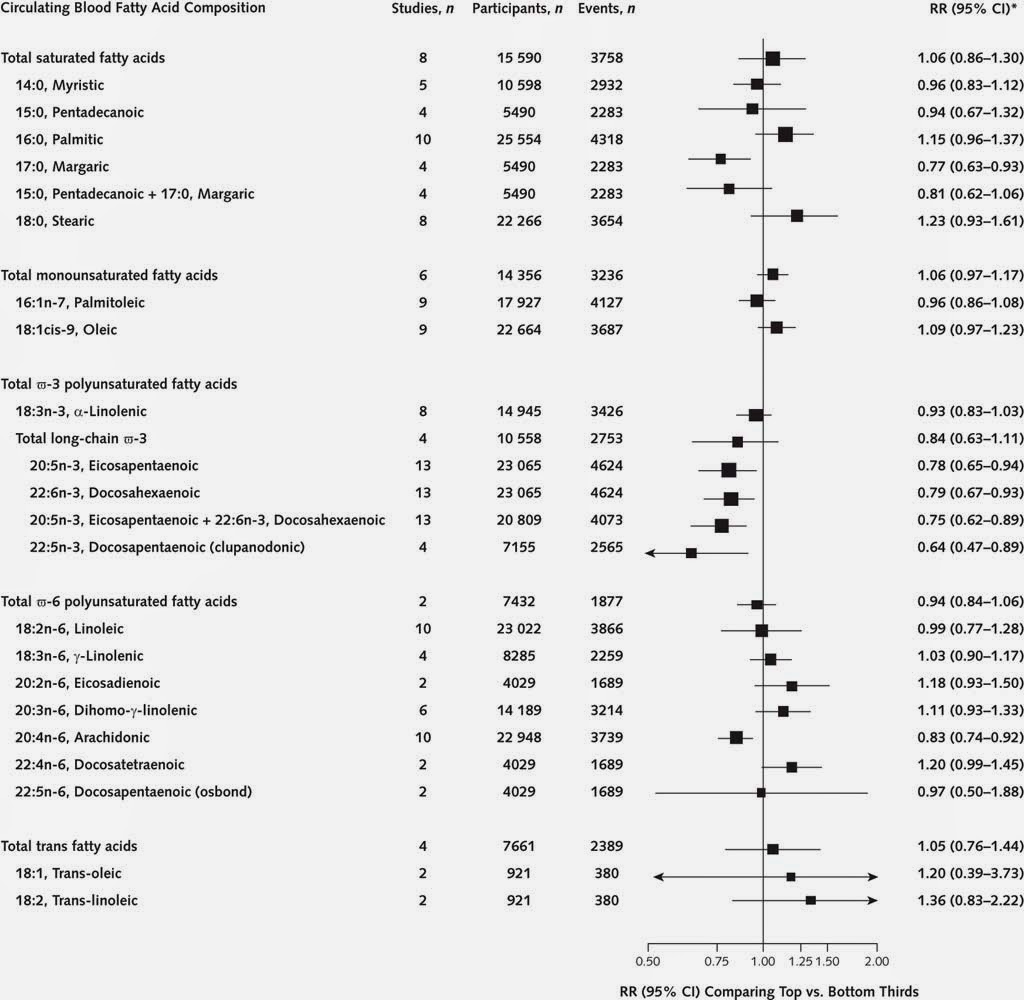
Like Siri-Tarino et al, Forests & Trees and "Eureka!" moments, Chowdhury et al is a meta-analysis of many studies. See Association of dietary, circulating, and supplement fatty acids with coronary risk: a systematic review and meta-analysis. I don't have access to the full study, but Google Image Search found Figure 2.
From https://annals.org/data/Journals/AIM/929862/6ff2_Figure_2_RRs_for_coronary_outcomes_in_prospective_cohort_studies_of_circulating_fatty_acid.jpeg

All saturated fatty acids have a RR for CHD of 1.06 (95% CI 0.86 - 1.30).
∴ There's no association between saturated fat intake and the RR for CHD.

Before LCHF'ers do a dance of joy, consider the Forest plot for individual saturated fatty acids.
Palmitic acid has a RR for CHD of 1.15 (95% CI 0.96 - 1.37).
Stearic acid has a RR for CHD of 1.23 (95% CI 0.93 - 1.61).

Red meat & saturated fats synthesised by DNL aren't looking too good. However...
Pentadecanoic acid has a RR for CHD of 0.94 (95% CI 0.67 - 1.32).
Margaric acid has a RR for CHD of 0.77 (95% CI 0.63 - 0.93).
Pentadecanoic acid and Margaric acid combined have a RR for CHD of 0.81 (95% CI 0.62 - 1.06).

See Differences in the prospective association between individual plasma phospholipid saturated fatty acids and incident type 2 diabetes: the EPIC-InterAct case-cohort study.

The above study is about T2DM not CHD, but Dietary intake of saturated fat by food source and incident cardiovascular disease: the Multi-Ethnic Study of Atherosclerosis shows that small amounts (5-10g/day) of dairy SFAs are protective against CHD, possibly due to the Vitamin K2 content.

Of the omega-3 fatty acids...
Eicosapentaenoic acid has a RR for CHD of 0.78 (95% CI 0.65 - 0.94).
Docosahexaenoic acid has a RR for CHD of 0.79 (95% CI 0.67 - 0.93).
Eicosapentaenoic acid and Docosahexaenoic acid combined have a RR for CHD of 0.75 (95% CI 0.62 - 0.89).

Of the omega-6 fatty acids...
Arachidonic acid has a RR for CHD of 0.83 (95% CI 0.74 - 0.92).

Of the trans-fatty acids...
Trans-oleic acid has a RR for CHD of 1.20 (95% CI 0.39 - 3.73).
Trans-linoleic acid has a RR for CHD of 1.36 (95% CI 0.83 - 2.22).

Monday, 4 August 2014

Historical perspectives on the impact of n-3 and n-6 nutrients on health, by Bill Lands.

Here's Fig. 1. from https://www.sciencedirect.com/science/article/pii/S0163782714000253
Relating tissue HUFA balance with blood cholesterol and heart attacks. Results from the 25-year follow-up in the Seven Countries Study [35] were discussed in an earlier review [10] which noted that “Food energy imbalances which elevate blood cholesterol may be fatal only to the degree that omega-6 (n-6) exceeds omega-3 (n-3) in tissue HUFA. Such evidence raises questions about the hypothesis that blood cholesterol levels cause CHD.” Northern Europe and Southern Europe have abbreviations “No.” and “So.”, respectively. The Figure is reprinted with permission of the publisher.

Hat-tip to Dr. Thomas Dayspring for Tweeting this review.

Fig. 1 is interesting, as it shows a significant association between 25-year CHD mortality and Serum Total Cholesterol for every region except Japan. What's different about Japan, compared to Northern Europe, USA, Serbia, Southern Europe & Crete?

According to Measuring Blood Fatty Acids as a Surrogate Indicator for Coronary Heart Disease Risk in Population Studies , Philippines & Iceland have lower % linoleic acid than Japan. Where's the CHD vs TC data?

Could another difference be that the Japanese eat rice, a relatively intact grain, instead of foods made from wheat grain dust (i.e. flour) as their main source of dietary carbohydrates?

See also Using 3–6 differences in essential fatty acids rather than 3/6 ratios gives useful food balance scores , and Omega 3-6 Balance Score.

Monday, 21 July 2014

Ancel B. Keys' critique of "Diet and coronary thrombosis. Hypothesis and fact, by John Yudkin. The Lancet, 1957."

Ancel B. Keys has come in for a lot of flak recently over alleged "cherry-picking" of data for his 6/7 Countries studies. Here's Keys' critique:- "SUCROSE IN THE DIET AND CORONARY HEART DISEASE" of Dr. John Yudkin's "15 Countries" article.

Keys accuses Yudkin of bias, cherry-picking countries that fit his own hypothesis.

Here are some plots from Keys' 11 Countries article.
5-Year CHD cases/1,000 men vs Sucrose %E.

5-Year CHD cases/1,000 men vs Sat Fats %E.

Sucrose %E vs Sat Fats %E.

So there you have it.

Saturday, 19 July 2014

Dr. John Yudkin's "Diet and coronary thrombosis. Hypothesis and fact", The Lancet, 1957.

Twitter did it again. From https://www.abc.net.au/catalyst/heartofthematter/download/Yudkinssugartheory.pdf
This looks like bad news for the fat-lovers.

There's good correlation between Coronary mortality and total fat intake, for countries 15 to 7. For countries 7 to 1, there's no correlation between Coronary mortality and total fat intake, suggesting that other differences (e.g. quality of health-care, social stress, antioxidant status etc) are significant factors.

This looks like bad news for the meat/fowl/fish/cheese/egg-lovers.


This looks like bad news for the sugar-lovers.

Of course, association ≠ causation.
This looks like bad news for rich people.

In conclusion, total fat intake, animal protein intake, sugar intake & annual income are all associated with increased Coronary mortality, over a certain range of values.

Friday, 27 June 2014

Saturated fats Saturated fats Saturated fats.

George Henderson left the following comment. I think that the information in it deserves a bigger audience.

Saturated fats seem to get the blame for everything nowadays. "Saturated fats clogged my arteries". "Saturated fats gave me cancer". "Saturated fats stole my job". O.K, I've done that joke before.

There are saturated fats, there are saturated fats, there are saturated fats, there are saturated fats, there are saturated fats and there are saturated fats. Saturated fats are an ester of Glycerol (a 3-carbon alcohol) and three saturated fatty acids (SFA's). There are roughly six categories of SFA's.

1) Short chain SFA's such as Acetic acid, Propionic acid, Butyric acid (found in butter and also what soluble fibre ferments into in the colon) and Caproic acid.
2) Medium chain SFA's such as Caprylic acid, Capric acid, Lauric acid and Myristic acid.
3) Long chain SFA's such as Stearic acid.
4) SFA's behaving like Palmitic acid.
5) Odd chain SFA's such as Pentadecylic acid and Margaric acid.
6) Very long chain SFA's such as Behenic acid.

See https://en.wikipedia.org/wiki/List_of_saturated_fatty_acids

In foods, the above SFA's are associated with different things.
1) and 2) don't get associated with much polyunsaturated fatty acids (PUFA's), e.g. dairy and tropical nuts.
3) and 4) are more likely to be associated with long-chain PUFA's, e.g. meats, poultry, temperate nuts.
5) is associated with CLA and not much PUFA's, e.g. dairy from grass-fed animals.

See also Siri-Tarino et al, Forests & Trees and "Eureka!" moments and Chowdhury et al, More forests & more trees and more "Eureka!" moments with cheese.

Thursday, 19 June 2014

Siri-Tarino et al, Forests & Trees and "Eureka!" moments.

Here's Fig. 2 from Meta-analysis of prospective cohort studies evaluating the association of saturated fat with cardiovascular disease:-
Risk ratios and 95% CIs for fully adjusted random-effects models examining associations between saturated fat intake in relation to coronary heart disease and stroke.

The above "Forest" plot has a subtotal RR of 1.07 (95% CI 0.96 1.19). The overall conclusion is that there's no association between saturated fat intake and the RR for CHD. Hmmm.

I looked at the data in Table 3. Of the 16 studies contributing to the CHD results, only 3 of them specify high sat fat intakes over a wide range. The results from these 3 studies are as follows:-

Pietinen et al: RR=0.93 (95% CI 0.6, 1.44).
Mann et al: RR=2.77 (95% CI 1.25, 6.13).
Boniface et al: Pooled RR = 1.37 (95% CI 1.17, 1.65).

The results from Pietinen et al are statistically-insignificant (95% CI values are way above & below 1) with an overall slight protective effect. The results from Mann et al have a RR >> 1 with both 95% CI's >1 and the results from Boniface et al have a RR >1 with both 95% CI's >1.

Other studies either have sat fat intakes varying from very low to low, or specify mean/median sat fat intakes without values for highest & lowest tertiles/quartiles/quintiles etc. Other studies have results that are statistically-insignificant.

However, there are some studies that show a slight protective effect of small amounts of sat fats. How come?

Thanks to George Henderson, I had a "Eureka!" moment. He posted a link to Dietary intake of saturated fat by food source and incident cardiovascular disease: the Multi-Ethnic Study of Atherosclerosis.

Here's Fig. 1 from that study.
HRs and 95% CI's of CVD risk according to quintiles of energy-adjusted SF from different sources (n = 5209).

The Meat SF plot has a net positive slope (bad news, but the range of intake is very small), the Butter & Plant SF plots are random, but the Dairy SF plot has a net negative slope (good news). Dairy saturated fats in amounts of up to 10g/day are protective against CHD. As the Dairy sat fat intake is too small to have a significant effect on lipids, what's the mechanism? I think that it's Vitamin K2. See Chowdhury et al, More forests & more trees and more "Eureka!" moments with cheese.

When you average out the results from all studies, the result is null. This is data dilution statistics.

EDIT: See also Study: Saturated Fat as Bad as Sugar!

Sunday, 15 June 2014

I'm NOT a lipophobe, I'm a very naughty boy!

First, postprandial triglycerides again. From Fasting Compared With Nonfasting Triglycerides and Risk of Cardiovascular Events in Women, here's a plot of HR for future CHD vs TG's at various times after eating.
Hazard ratio (HR) and 95% confidence interval (CI) for highest vs lowest tertiles of triglyceride level (see Table 3 for values), adjusted for age, blood pressure, smoking, hormone use, levels of total and high-density lipoprotein cholesterol, diabetes mellitus, body mass index, and high-sensitivity C-reactive protein level.

Notice how the HR falls with increasing time from last meal. As TG's ≥12 hours after eating are a surrogate for Insulin Resistance (IR) and the HR is only 1.04 (95% CI 0.79 - 1.38), this strongly suggests that IR is not a significant factor.

It's been suggested that IR might increase PP TG's in the 2 - 4 hour period due to impaired clearance. According to Fig. 3B in Extended effects of evening meal carbohydrate-to-fat ratio on fasting and postprandial substrate metabolism, TG clearance in healthy men doesn't significantly start until after 4 hours has elapsed. Therefore, an impairment in TG clearance isn't going to make a significant difference to TG level in the 2 - 4 hour period.

Second, the reason why I'm having to repeat myself is due to Cholesterol: Do chylomicrons clog your arteries? (2), where I've been called "my resident lipophobe". As I drink Gold Top milk (5.2g of fat/100mL) and eat pork including belly slices (you know, those strips of pork with a lot of fat on them), I'm being attacked for something that I'm not.

What I'm criticising is dietary extremism. Eating fats in foods is fine by me, but eating sticks of Kerrygold butter and/or dumping loads of butter and/or MCT oil into coffee to achieve "Nutritional Ketosis" is not a good idea. Anyway, here's an amusing spoof on Bulletproof coffee.

Monday, 26 August 2013

False dichotomies: serum cholesterol level vs all-cause mortality. Cause or effect?

Here are some plots from the MRFIT study.
From https://sph.bu.edu/otlt/MPH-Modules/PH/PH709_Heart/PH709_Heart5.html

Although the relative risk (RR) for coronary heart disease (CHD) and cardiovascular disease (CVD) mortalities increase with serum total cholesterol (TC) level, all-cause mortality follows a U-curve.

According to Low Serum Cholesterol and Mortality: Which Is the Cause and Which Is the Effect?, certain illnesses that increase mortality lower TC levels. This is the Iribarren hypothesis.

According to Cholesterol and all-cause mortality in elderly people from the Honolulu Heart Program: a cohort study, TC that's low and is still low 20 years later results in a 64% increase in the RR for mortality relative to TC that's intermediate and is still intermediate 20 years later.

Table 4 Relative risk for mortality based on change in cholesterol between examinations three and four
Is low TC level the cause of, or the effect of fatal illnesses? I think that it's both. Cholesterol is an important substance, as a severe lack of it is bad news, as per Smith–Lemli–Opitz syndrome. If certain illnesses result in a depletion of cholesterol and cholesterol synthesis is too low, there's insufficient cholesterol to allow recovery.

Interestingly, TC that's low but is intermediate 20 years later results in a 30% increase in the RR for mortality, whereas TC that's low but is high 20 years later results in a 5% increase in the RR for mortality.

P.S. There's a false dichotomy for vitamin D level vs illness. Ditto for carbohydrates vs calories.

Wednesday, 19 June 2013

Completing the trine: Which are the safest fats?

First, watch this video by Chris Masterjohn.

Diets very high in pufas (polyunsaturates) are not beneficial to heart health or longevity. Flora? No thanks!

Here's a chart. The beige & grey bars represent pufas (omega-6 & omega-3).
Comparison of dietary fats
The yellow bars represent monounsaturates and the orangey-red bars represent saturates. I consider these to be harmless, as long as you don't go mad and eat them in such large amounts that you gain weight.

Bearing in mind the information in the video, plus the information in Fats: Spawn of Satan or Dogs' Doodads? , I use only fats from the bottom 6 for cooking (olive oil and butter, actually).

Flaxseed oil can be used as an omega-3 supplement for vegetarian/vegan women, as omega-3 pufas are as rare as rocking-horse poo in most foods (apart from oily fish).

Non-vegetarian/vegan people can get their long-chain omega-3 pufas (EPA & DHA) from oily fish. As vegetarian/vegan men barely produce any DHA from the omega-3 in flaxseed oil, they should get it from algal DHA supplements. See Extremely Limited Synthesis of Long Chain Polyunsaturates in Adults: Implications for their Dietary Essentiality and use as Supplements.

Tuesday, 28 May 2013

\ curves and U curves: Vitamins D3 and K2 again.

Here are some curves relating to Vitamin D. Ref: https://www.ncbi.nlm.nih.gov/pubmed/23601272
Hazard Ratios (HRs) vs serum Vitamin D level
The solid lines are the 95% confidence intervals (CI) & mean for all-cause mortality. 95% CI's are the values within which 95% of the subjects tested fall. 2.5% fall below the lower CI and 2.5% fall above the upper CI. The dashed lines are the 95% CIs & mean for coronary heart disease (CHD) mortality. Most of the curves follow a \ curve, indicating that more Vitamin D is better, up to 66ng/mL (150nmol/L, the level that I'm at). The interesting curve is the upper dashed line, which follows a U curve.

The U curve indicates that a Vitamin D level of greater than 30ng/mL (75nmol/L) increases the Hazard Ratio (HR) for CHD in the top 2.5% of subjects only, relative to 30ng/mL, even though the mean HRs for CHD & all-cause mortality (the more important parameter) are decreasing, up to 66ng/mL. What's occurring?

See Vitamin K. The increase in HR for CHD mortality above 30ng/mL in the top 2.5% of subjects only is almost certainly due to calcification within artery walls, due to under-carboxylation of osteocalcin in bone Matrix Gla Proteins, caused by insufficient Vitamin K2 rather than excessive Vitamin D. This is why I supplement with Vitamin K2. See also Vitamin D toxicity redefined: vitamin K and the molecular mechanism.

Thursday, 7 February 2013

Just say "NO". There's more to sunlight than Vitamin D3.

Just say NO?


Hat-tip to Richard Nikoley for posting the following video by Richard Weller, which I am posting as an embedded YouTube video rather than a Vimeo one, as YouTube gives me fewer problems.


Take-away message: Deaths from heart disease are 100 times higher than deaths from skin cancer (because the vast majority of skin cancers are benign).

Saturday, 3 March 2012

Warning signs to look out for when a heart attack is coming.

R.I.P. Davy Jones. I sang "Daydream Believer" at karaoke two nights running as a tribute.


The article Davy Jones Dead: Warning Signs to Look Out for When a Heart Attack is Coming caught my attention.

"At 66, Davy Jones appears to be living a healthy life. He was a vegetarian. He goes on a regular morning run. He was not just a horse owner but also a rider. Davy Jones seems to be generally fit and healthy to succumb to a deadly heart attack."

He's like H. Jay Dinshah, who also died of a heart attack at the age of 66. I strongly advise vegetarians & vegans to watch "Dr Greger: 2003 - Optimum Vegetarian Nutrition - Omega 3 and B12"

Saturday, 25 February 2012

Cheapest Vitamin D3 yet.

A big thank you to Ted Hutchinson for bringing Vitamin D3 to my attention. Healthy Origins, Depot Vitamin D3, 125mcg (5,000IU) is very reasonably priced (£26.56 for 360 gelcaps which is a year's supply at 2026 prices).


Thursday, 25 March 2010

Vitamin D3: Studies from 2005 to present.

I had a rummage through PubMed looking for editorials, meta-studies & human Randomised Controlled Trials on Vitamin D and Vitamin D3 from 2005 to present. Here is a selection (mostly using reasonable doses) that weren't previously mentioned in my Vitamin D blog. They are, now!

The Role of Vitamin D in Cancer Prevention
Estimates of optimal vitamin D status.
Prevalence of Vitamin D inadequacy among postmenopausal North American women receiving osteoporosis therapy.
Fracture prevention with vitamin D supplementation: a meta-analysis of randomized controlled trials.
The re-emerging burden of rickets: a decade of experience from Sydney.
An excess of widespread pain among South Asians: are low levels of vitamin D implicated?
Vitamin D is associated with improved survival in early-stage non-small cell lung cancer patients.
Vitamin D and prevention of colorectal cancer.
Should older people in residential care receive vitamin D to prevent falls? Results of a randomized trial.
Effect of vitamin D replacement on musculoskeletal parameters in school children: a randomized controlled trial.
Effect of cholecalciferol plus calcium on falling in ambulatory older men and women: a 3-year randomized controlled trial.
Vitamin D supplementation improves cytokine profiles in patients with congestive heart failure: a double-blind, randomized, placebo-controlled trial.
Estimation of optimal serum concentrations of 25-hydroxyvitamin D for multiple health outcomes.
Risk factors for vitamin D inadequacy among women with osteoporosis: an international epidemiological study.
A system for improving vitamin D nutrition in residential care.
Impact of dietary and lifestyle on vitamin D in healthy student girls aged 11-15 years.
How much vitamin D3 do the elderly need?
Lower levels of plasma 25-hydroxyvitamin D among young adults at diagnosis of autoimmune type 1 diabetes compared with control subjects: results from the nationwide Diabetes Incidence Study in Sweden (DISS).
A meta-analysis of second cancers after a diagnosis of nonmelanoma skin cancer: additional evidence that solar ultraviolet-B irradiance reduces the risk of internal cancers.
Risk assessment for vitamin D.
Supplementation with calcium + vitamin D enhances the beneficial effect of weight loss on plasma lipid and lipoprotein concentrations.
Serum 25(OH)D levels, dietary intake of vitamin D, and colorectal adenoma recurrence.
The effects of calcium and vitamin D supplementation on blood glucose and markers of inflammation in nondiabetic adults.
Optimal vitamin D status for colorectal cancer prevention: a quantitative meta analysis.
A higher dose of vitamin d reduces the risk of falls in nursing home residents: a randomized, multiple-dose study.
Potentially modifiable determinants of vitamin D status in an older population in the Netherlands: the Hoorn Study.
Fracture prevention with vitamin D supplementation: considering the inconsistent results.
A prospective study of plasma vitamin D metabolites, vitamin D receptor polymorphisms, and prostate cancer.
The role of vitamin D and calcium in type 2 diabetes. A systematic review and meta-analysis.
A single dose of vitamin D enhances immunity to mycobacteria.
Does solar exposure, as indicated by the non-melanoma skin cancers, protect from solid cancers: vitamin D as a possible explanation.
Vitamin D intake and breast cancer risk in postmenopausal women: the Iowa Women's Health Study.
Vitamin D and calcium supplementation reduces cancer risk: results of a randomized trial.
Bone mineral density and bone markers in patients with a recent low-energy fracture: effect of 1 y of treatment with calcium and vitamin D.
Vitamin D deficiency in multicultural primary care: a case series of 299 patients.
Vitamin D supplementation and total mortality: a meta-analysis of randomized controlled trials.
Efficacy of different doses and time intervals of oral vitamin D supplementation with or without calcium in elderly nursing home residents.
Vitamin D status and response to Vitamin D(3) in obese vs. non-obese African American children.
Vitamin D and skin physiology: a D-lightful story.
Additive benefit of higher testosterone levels and vitamin D plus calcium supplementation in regard to fall risk reduction among older men and women.
Rapid correction of low vitamin D status in nursing home residents.
Effects of a long-term vitamin D and calcium supplementation on falls and parameters of muscle function in community-dwelling older individuals.
Prevalence of vitamin d insufficiency in patients with Parkinson disease and Alzheimer disease.
Exploration of association of 1,25-OH2D3 with augmentation index, a composite measure of arterial stiffness.
Vitamin D and prevention of colorectal adenoma: a meta-analysis.
The tolerability and biochemical effects of high-dose bolus vitamin D2 and D3 supplementation in patients with vitamin D insufficiency.
Administration of oral vitamin D induces cathelicidin production in atopic individuals.
Estimation of the dietary requirement for vitamin D in healthy adults.
Changes in 25-Hydroxyvitamin D3 to oral treatment with vitamin D3 in postmenopausal females with osteoporosis.
Vitamin D or hormone D deficiency in autoimmune rheumatic diseases, including undifferentiated connective tissue disease.
High-dose oral vitamin D3 supplementation in the elderly.
A double-blind, randomized, placebo-controlled trial of the short-term effect of vitamin D3 supplementation on insulin sensitivity in apparently healthy, middle-aged, centrally obese men.
Vitamin D deficiency in older men.
Serum vitamin D and risk of pancreatic cancer in the prostate, lung, colorectal, and ovarian screening trial.
Vitamin D supplementation during Antarctic winter.
Vitamin D insufficiency and treatment with oral vitamin D3 in northern-dwelling patients with chronic kidney disease.
Long-term effects of giving nursing home residents bread fortified with 125 microg (5000 IU) vitamin D(3) per daily serving.
Effects of vitamin D and calcium supplementation on markers of apoptosis in normal colon mucosa: a randomized, double-blind, placebo-controlled clinical trial.
Estimation of the dietary requirement for vitamin D in free-living adults >=64 y of age.
Vitamin D supplementation enhances the beneficial effects of weight loss on cardiovascular disease risk markers.
Plasma 25-hydroxyvitamin D concentration and metabolic syndrome among middle-aged and elderly Chinese individuals.
Meta-analysis: longitudinal studies of serum vitamin D and colorectal cancer risk.
Effect of vitamin D supplementation in the institutionalized elderly.
Calcitriol ointment 3 microg/g is safe and effective over 52 weeks for the treatment of mild to moderate plaque psoriasis.
Association between 25-hydroxyvitamin D levels and cognitive performance in middle-aged and older European men.
Low parathyroid hormone levels in bedridden geriatric patients with vitamin D deficiency.
Increased levels of 25 hydroxyvitamin D and 1,25-dihydroxyvitamin D after rosuvastatin treatment: a novel pleiotropic effect of statins?
Effect of vitamin D deficiency and replacement on endothelial function in asymptomatic subjects.
Vitamin D and depressive symptoms in women during the winter: a pilot study.
Treatment of vitamin D deficiency increases lower limb muscle strength in institutionalized older people independently of regular physical activity: a randomized double-blind controlled trial.
Vitamin D, parathyroid hormone and the metabolic syndrome in middle-aged and older European men.
Vitamin D supplementation reduces insulin resistance in South Asian women living in New Zealand who are insulin resistant and vitamin D deficient - a randomised, placebo-controlled trial.
Fall prevention with supplemental and active forms of vitamin D: a meta-analysis of randomised controlled trials.
Meta-analysis of vitamin D, calcium and the prevention of breast cancer.
Effects of vitamin d and calcium on proliferation and differentiation in normal colon mucosa: a randomized clinical trial.
Combination of alfacalcidol with calcium can improve quadriceps muscle strength in elderly ambulatory Thai women who have hypovitaminosis D: a randomized controlled trial.
Vitamin D(3) induces expression of human cathelicidin antimicrobial peptide 18 in newborns.
Levels of vitamin D and cardiometabolic disorders: systematic review and meta-analysis.
No significant effect on bone mineral density by high doses of vitamin D3 given to overweight subjects for one year.
Effects of supplemental vitamin D and calcium on oxidative DNA damage marker in normal colorectal mucosa: a randomized clinical trial.
Vitamin D levels, lung function, and steroid response in adult asthma.
Association between pre-diagnostic circulating vitamin D concentration and risk of colorectal cancer in European populations:a nested case-control study.
Pandemic preparedness for swine flu influenza in the United States.
Randomized trial of vitamin D supplementation to prevent seasonal influenza A in schoolchildren.
Vitamin D supplementation suppresses age-induced bone turnover in older women who are vitamin D deficient.
Suppression of C-terminal telopeptide in hypovitaminosis D requires calcium as well as vitamin D.
A phase I/II dose-escalation trial of vitamin D3 and calcium in multiple sclerosis.
Milk fortified with the current adequate intake for vitamin D (5 microg) increases serum 25-hydroxyvitamin D compared to control milk but is not sufficient to prevent a seasonal decline in young women.
Vitamin D-vitamin K interaction: effect of vitamin D supplementation on serum percentage undercarboxylated osteocalcin, a sensitive measure of vitamin K status, in Danish girls.
Vitamin D status and impact of vitamin D3 and/or calcium supplementation in a randomized pilot study in the Southeastern United States.
Calcium/vitamin D supplementation and coronary artery calcification in the Women's Health Initiative.
Circulating 25-hydroxyvitamin D and risk of pancreatic cancer: Cohort Consortium Vitamin D Pooling Project of Rarer Cancers.*
A 16-week randomized clinical trial of 2000 international units daily vitamin D3 supplementation in black youth: 25-hydroxyvitamin D, adiposity, and arterial stiffness.
The effect of narrowband UV-B treatment for psoriasis on vitamin D status during wintertime in Ireland.
Effects of vitamin D supplementation to children diagnosed with pneumonia in Kabul: a randomised controlled trial.
Dairy calcium intake, serum vitamin D, and successful weight loss.
Atorvastatin increases 25-hydroxy vitamin D concentrations in patients with polycystic ovary syndrome.
A randomized controlled trial of the effects of vitamin D on muscle strength and mobility in older women with vitamin D insufficiency.
Serum 25-hydroxyvitamin D concentration is associated with functional capacity in older adults with heart failure.
Effect of vitamin D supplementation on testosterone levels in men.
Vitamin D production depends on ultraviolet-B dose but not on dose rate: a randomized controlled trial.
Vitamin D(3) is more potent than vitamin D(2) in humans.
Nutrients and foods for the primary prevention of asthma and allergy: systematic review and meta-analysis.
High-dose vitamin D(3) during intensive-phase antimicrobial treatment of pulmonary tuberculosis: a double-blind randomised controlled trial.
Circulating 25-hydroxyvitamin D levels and frailty in older men: the osteoporotic fractures in men study.
Association of low serum 25-hydroxyvitamin D levels and mortality in the critically ill.
Effects of vitamin D supplementation on 25-hydroxyvitamin D, high-density lipoprotein cholesterol, and other cardiovascular disease risk markers in subjects with elevated waist circumference.
Changes in balance, functional performance and fall risk following whole body vibration training and vitamin D supplementation in institutionalized elderly women. A 6 month randomized controlled trial.
Diet induced thermogenesis, fat oxidation and food intake following sequential meals: influence of calcium and vitamin D.
The response of elderly veterans to daily vitamin D3 supplementation of 2,000 IU: a pilot efficacy study.
Meta-analysis: Circulating vitamin D and ovarian cancer risk.
Relation of vitamin D level to maximal oxygen uptake in adults.
Vitamin D status in patients with stage IV colorectal cancer: findings from Intergroup trial N9741.
Circulating levels of vitamin D and colon and rectal cancer: the Physicians' Health Study and a meta-analysis of prospective studies.
Burning daylight: balancing vitamin D requirements with sensible sun exposure.
Relationships between vitamin D status and cardio-metabolic risk factors in young European adults.
Latitude is significantly associated with the prevalence of multiple sclerosis: a meta-analysis.
Vitamin D status and early age-related macular degeneration in postmenopausal women.
Vitamin D and clinical disease progression in HIV infection: results from the EuroSIDA study.
Annual high-dose vitamin D3 and mental well-being: randomised controlled trial.
Vitamin D status and outcomes in heart failure patients.
The impact of vitamin D status on periodontal surgery outcomes.
The role of paricalcitol on proteinuria.
Effects of weight loss on serum vitamin D in postmenopausal women.
Vitamin D status and mortality risk in CKD: a meta-analysis of prospective studies.
Vitamin D intake and risk of cardiovascular disease in US men and women.
Meta-analysis: Serum vitamin D and colorectal adenoma risk.
Calcium plus vitamin D supplementation and the risk of nonmelanoma and melanoma skin cancer: post hoc analyses of the women's health initiative randomized controlled trial.
Effects of vitamin D and calcium supplementation on pancreatic β cell function, insulin sensitivity, and glycemia in adults at high risk of diabetes: the Calcium and Vitamin D for Diabetes Mellitus (CaDDM) randomized controlled trial.
Vitamin D supplementation for prevention of mortality in adults.
The effect of calcium plus vitamin D on risk for invasive cancer: results of the Women's Health Initiative (WHI) calcium plus vitamin D randomized clinical trial.
New clinical trials with vitamin D and analogs in renal disease.
The relation between vitamin D deficiency and fibromyalgia syndrome in women.
Interventions for latent autoimmune diabetes (LADA) in adults.
Calcium and vitamin D supplementation is associated with decreased abdominal visceral adipose tissue in overweight and obese adults.
Effect of vitamin D supplementation on muscle strength, gait and balance in older adults: a systematic review and meta-analysis.
Vitamin D3 and the risk of CVD in overweight and obese women: a randomised controlled trial.
Low 25-hydroxyvitamin D is associated with increased mortality in female nursing home residents.
Improvement of vitamin D status resulted in amelioration of biomarkers of systemic inflammation in the subjects with type 2 diabetes.
Vitamin D supplementation in infants with chronic congestive heart failure.
Vitamin D reduces musculoskeletal pain after infusion of zoledronic acid for postmenopausal osteoporosis.
Consumption of vitamin D-and calcium-fortified soft white cheese lowers the biochemical marker of bone resorption TRAP 5b in postmenopausal women at moderate risk of osteoporosis fracture.
Vitamin D improves viral response in hepatitis C genotype 2-3 naïve patients.
Vitamin D supplementation in the treatment of atopic dermatitis: a clinical trial study.
Effect of vitamin D repletion on urinary calcium excretion among kidney stone formers.
25-Hydroxyvitamin D levels and the risk of stroke: a prospective study and meta-analysis.
Improvement of vitamin D status via daily intake of fortified yogurt drink either with or without extra calcium ameliorates systemic inflammatory biomarkers, including adipokines, in the subjects with type 2 diabetes.
Treatment of vitamin D insufficiency in children and adolescents with inflammatory bowel disease: a randomized clinical trial comparing three regimens.
Therapeutic effects of calcium & vitamin D supplementation in women with PCOS.
Higher vitamin D dietary intake is associated with lower risk of alzheimer's disease: a 7-year follow-up.
Vitamin D3 supplementation at 4000 international units per day for one year results in a decrease of positive cores at repeat biopsy in subjects with low-risk prostate cancer under active surveillance.
Comparison of narrowband ultraviolet B exposure and oral vitamin D substitution on serum 25-hydroxyvitamin D concentration.
The relation between sunscreen layer thickness and vitamin D production after ultraviolet B exposure: a randomized clinical trial.
Circulating 25-hydroxyvitamin D concentration and the risk of type 2 diabetes: results from the European Prospective Investigation into Cancer (EPIC)-Norfolk cohort and updated meta-analysis of prospective studies.
Vitamin D3 therapy corrects the tissue sensitivity to angiotensin ii akin to the action of a converting enzyme inhibitor in obese hypertensives: an interventional study.
The effect of combined calcium and cholecalciferol supplementation on bone mineral density in elderly women with moderate chronic kidney disease.
Comparison of vitamin D2 and vitamin D3 supplementation in raising serum 25-hydroxyvitamin D status: a systematic review and meta-analysis.
Relative effectiveness of oral 25-hydroxyvitamin D3 and vitamin D3 in raising wintertime serum 25-hydroxyvitamin D in older adults.
Vitamin D supplementation and depression in the women's health initiative calcium and vitamin D trial.
Vitamin D with calcium reduces mortality: patient level pooled analysis of 70,528 patients from eight major vitamin D trials.
An open label, randomized controlled study of oral calcitriol for the treatment of proteinuria in patients with diabetic kidney disease.
Ergocalciferol from mushrooms or supplements consumed with a standard meal increases 25-hydroxyergocalciferol but decreases 25-hydroxycholecalciferol in the serum of healthy adults.
Narrowband ultraviolet B three times per week is more effective in treating vitamin D deficiency than 1600 IU oral vitamin D₃ per day: a randomized clinical trial.
Vitamin D intake is inversely related to risk of developing metabolic syndrome in African American and white men and women over 20 y: the Coronary Artery Risk Development in Young Adults study.
Vitamin D and gestational diabetes: a systematic review and meta-analysis.
Associations between 25-hydroxyvitamin D and weight gain in elderly women.
Effect of cholecalciferol as adjunctive therapy with insulin on protective immunologic profile and decline of residual β-cell function in new-onset type 1 diabetes mellitus.
A pooled analysis of vitamin D dose requirements for fracture prevention.
Determinants and effects of vitamin D supplementation on serum 25-hydroxy-vitamin D levels in patients with rheumatoid arthritis.
Vitamin D is a major determinant of bone mineral density at school age.
Effect of vitamin D and inhaled corticosteroid treatment on lung function in children.
Serum 25-hydroxyvitamin D3 and D2 and non-clinical psychotic experiences in childhood.
Vitamin D deficiency in postmenopausal, healthy women predicts increased cardiovascular events: a 16-year follow-up study.
Randomized trial of vitamin D supplementation and risk of acute respiratory infection in Mongolia.
25-hydroxyvitamin d levels and risk of ischemic heart disease, myocardial infarction, and early death: population-based study and meta-analyses of 18 and 17 studies.
Association of low serum 25-hydroxyvitamin D levels and acute kidney injury in the critically ill.
A 12-week double-blind randomized clinical trial of vitamin D₃ supplementation on body fat mass in healthy overweight and obese women.
Circulating 25-hydroxy-vitamin D and risk of cardiovascular disease: a meta-analysis of prospective studies.
Relation of severe deficiency of vitamin D to cardiovascular mortality during acute coronary syndromes.
Vitamin D reduces left atrial volume in patients with left ventricular hypertrophy and chronic kidney disease.
Interventions for preventing falls in older people in care facilities and hospitals.
Vitamin D and risk of death from vascular and non-vascular causes in the Whitehall study and meta-analyses of 12,000 deaths.
Calcium plus vitamin D3 supplementation facilitated fat loss in overweight and obese college students with very-low calcium consumption: a randomized controlled trial.
Randomized controlled trial of vitamin D supplement on endothelial function in patients with type 2 diabetes.
Effect of vitamin D supplementation on progression of knee pain and cartilage volume loss in patients with symptomatic osteoarthritis: a randomized controlled trial.
Lipoprotein lipase links vitamin D, insulin resistance, and type 2 diabetes: a cross-sectional epidemiological study.
The effect of different doses of vitamin D supplementation on insulin resistance during pregnancy.
Vitamin D and dental caries in controlled clinical trials: systematic review and meta-analysis.
Vitamin D deficiency and depression in adults: systematic review and meta-analysis.
Improving the vitamin D status of vitamin D deficient adults is associated with improved mitochondrial oxidative function in skeletal muscle.
Low 25-OH vitamin D is associated with benign prostatic hyperplasia.
Correcting vitamin D insufficiency improves insulin sensitivity in obese adolescents: a randomized controlled trial.
Vitamin D levels in Alzheimer's and Parkinson's diseases: a meta-analysis.
Supplemental vitamin D and physical performance in COPD: a pilot randomized trial.
Vitamin D and risk of future hypertension: meta-analysis of 283,537 participants.
Randomized clinical trial of vitamin D3 doses on prostatic vitamin D metabolite levels and ki67 labeling in prostate cancer patients.
Randomized, double-blind, placebo-controlled trial of vitamin D supplementation in Parkinson disease.
Anti-inflammatory effect of vitamin D on gingivitis: a dose-response randomised control trial.
Role of vitamin D in children with respiratory tract infection.
Effect of vitamin D supplementation and ultraviolet B exposure on serum 25-hydroxyvitamin D concentrations in healthy volunteers: a randomized, crossover clinical trial.
Vitamin D and multiple sclerosis: what is the clinical impact?
Is hypovitaminosis D associated with abdominal aortic aneurysm, and is there a dose-response relationship?
Plasma vitamin D levels, menopause, and risk of breast cancer: dose-response meta-analysis of prospective studies.
Impact of vitamin D on chronic kidney diseases in non-dialysis patients: a meta-analysis of randomized controlled trials.
Serum 25-hydroxyvitamin D levels and the risk of depression: a systematic review and meta-analysis.
The effect of vitamin D-related interventions on multiple sclerosis relapses: a meta-analysis.
Vitamin D status and physical function in nursing home residents: a 1-year observational study.
Maternal vitamin D status and risk of pre-eclampsia: a systematic review and meta-analysis.
Meta-analysis: vitamin D and non-alcoholic fatty liver disease.
Serum 25-hydroxyvitamin D and breast cancer risk: a meta-analysis of prospective studies.
Treatment with oral active vitamin D is associated with decreased risk of peritonitis and improved survival in patients on peritoneal dialysis.
Vitamin D supplementation affects serum high-sensitivity C-reactive protein, insulin resistance, and biomarkers of oxidative stress in pregnant women.
The role of vitamin D supplementation in the risk of developing pneumonia: three independent case-control studies.
Short-term vitamin D3 supplementation lowers plasma renin activity in patients with stable chronic heart failure: an open-label, blinded end point, randomized prospective trial (VitD-CHF trial).
Vitamin D and psychosis: mini meta-analysis.
Meta-analysis of memory and executive dysfunctions in relation to vitamin D.
Vitamin D intake and lung cancer risk in the Women's Health Initiative.
Association of low serum 25-hydroxyvitamin D levels and sepsis in the critically ill.
Vitamin D favorably alters the cancer promoting prostaglandin cascade.
Vitamin D intake and risk of type 1 diabetes: a meta-analysis of observational studies.
Effect of vitamin D supplementation on antibiotic use: a randomized controlled trial.
Effects of vitamin D supplementation on glucose metabolism, lipid concentrations, inflammation, and oxidative stress in gestational diabetes: a double-blind randomized controlled clinical trial.
Improvement in high-density lipoprotein cholesterol levels in argentine Indian school children after vitamin D supplementation.
Vitamin D supplementation for prevention of mortality in adults.
Beneficial role for supplemental vitamin D3 treatment in chronic urticaria: a randomized study.
Vitamin D3 supplementation during weight loss: a double-blind randomized controlled trial.
Vitamin D and risk of cause specific death: systematic review and meta-analysis of observational cohort and randomised intervention studies.


*See Vitamin D and UV fluctuations for an explanation.

Phew! That's a bit more than I expected.

If you fancy doing a search yourself, click on PubMed.