Showing posts with label Diabetes. Show all posts

Sunday, 12 October 2014

A tale of the unexpected & an analogy.

The tale.


A friend had a faulty lap-top mains adaptor. It was one of these:-
From https://www.pchub.com/uph/laptop/46-33769-9191/Toshiba-Common-Item-Toshiba-AC-Adapter-Laptop.html

I offered to fault-find it. I measured the output voltage with my multimeter.

The output voltage was 0V.

I felt the lead where it exited the connector. It didn't feel right, so I cut the connector off & stripped-off some insulation. Lo and behold, the inner conductor (it was co-axial cable) was broken. I prepared the conductors, tinned them, soldered them and powered the adaptor, with a sense of impending triumph.

The output voltage was 0V.

I tested the continuity from conductors to connector. That's when I discovered that there was a short-circuit between the inner and outer conductors. I snipped-off the connector and confirmed that it was the connector that was short-circuited, not the adaptor or cable. I fitted a replacement connector and powered the adaptor, with a sense of impending triumph.

The output voltage was 0V.

At this point, I decided that the adapter was Beyond Economic Repair and advised the friend to buy a new one, which subsequently worked perfectly.

So, how did the adapter get to have not one, not two but THREE faults on it? It turned out that the lead had been yanked sideways, which bent the connector. The friend had straightened the connector with pliers (!). This short-circuited the connector, resulting in an internal fuse blowing in the adapter. The friend then "jiggled" the connector in the socket, in a vain attempt to make it work. This broke the inner conductor of the co-axial cable.

The analogy.


Some health problems are multi-factorial. Fixing only one, but not all of the problems, results in not fixing the problem. So, if you try "A" and there's no improvement, either "A" isn't one of the problems, or "B", "C"......"Z" need fixing, too.

This post was inspired by Effects of 12 weeks high dose vitamin D3 treatment on insulin sensitivity, beta cell function, and metabolic markers in patients with type 2 diabetes and vitamin D insufficiency - a double-blind, randomized, placebo-controlled trial.

Taking an effective dose of Vitamin D3 for a reasonable length of time didn't make a significant difference to insulin sensitivity or beta cell function. It did for me, as my main problem was Vitamin D insufficiency. I got lucky.

Tuesday, 29 July 2014

Dietary Carbohydrate restriction as the first approach in diabetes management. Critical review and evidence base, by Richard D Feinman et al.

Another Bookmarking post.
From https://dgeneralist.blogspot.co.uk/2013/11/the-low-carb-high-fat-diet.html

The study in question is Dietary Carbohydrate restriction as the first approach in diabetes management. Critical review and evidence base. Here are my comments on the 12 points.

Point 1 is wrong. For ~85% of people who have T2DM, hyper*emia is the salient feature, where * = glucose, TG's, cholesterol, NEFAs, uric acid etc. For ~85% of people who have T2DM, it's a disease of chronic excess.

Ad lib LCHF diet → ↓ Blood glucose & ↓ fasting TG's, but ↑ PP TG's, ↑ LDL-C, ↑ LDL-P & ↑ NEFAs. See Postprandial lipoprotein clearance in type 2 diabetes: fenofibrate effects.
↑ PP TG's is associated with ↑ RR of CHD.
↑ LDL-P is associated with ↑ RR of CHD.
↑ NEFAs are associated with ↑ RR of Sudden Cardiac Death.

Point 2: So? T2DM is a disease of chronic excess. Chronic over-consumption was caused by Food Industry marketing, not carbohydrates.

Point 3 is wrong. A caloric deficit is essential, to reverse liver & pancreas ectopic fat accumulation. See Reversing type 2 diabetes, the lecture explaining T2D progression, and how to treat it.

Point 4 is misleading. Feinman doesn't distinguish between different types of carbohydrates. Starches, especially resistant starches (e.g. Amylose) are beneficial. See Point 11.

Point 5 is moot. Prof. Roy Taylor found that motivation determines adherence. Prof. Roy Taylor's PSMF was adhered to. See Point 3.

Point 6 is correct. Prof. Roy Taylor's PSMF is ~1g Protein/kg Bodyweight, some ω-6 & ω-3 EFAs & veggies for fibre. See Point 3.

Point 7 is misleading. Siri-Tarino et al gave a null result by including low fat studies, also a dairy fat study which had a RR < 1 for increasing intake. Chowdhury et al gave a null result, as some fats have a RR > 1 for increasing intake and some have a RR < 1 for increasing intake.

Point 8 is irrelevant. ↑ Dietary fat → ↑ 2-4 hour PP TG's. See Point 1.

Point 9 is partly correct. Microvascular, yes. Macrovascular, no. See Point 8.

Point 10 is mostly irrelevant. See Point 8.

Point 11 ignores results obtained with high-starch diets, where the starch contains a high proportion of Amylose. See Walter Kempner, MD – Founder of the Rice Diet and From Table to Able: Combating Disabling Diseases with Food.

Point 12 is misleading. The low-carbohydrate part is fine. It's the high-fat part that can cause problems. See Point 8.

Wednesday, 9 July 2014

Why you really can't outrun your fork.

Hat-tip to Yoni Freedhoff.
From https://www.blacksheepfitness.co.uk/you-cant-outrun-your-fork.html

See Effect of school-based physical activity interventions on body mass index in children: a meta-analysis.
"Meta-analysis showed that BMI did not improve with physical activity interventions (weighted mean difference -0.05 kg/m2, 95% confidence interval -0.19 to 0.10). We found no consistent changes in other measures of body composition."

Some people believe that if going to the gym isn't making them lose weight, they're not exercising hard enough. Chronically over-exercising can chronically raise serum cortisol, which makes the kidneys retain water, causing a stall in weight-loss, as well as causing raised fasting blood glucose, irritability, poor memory and a slower metabolic rate, due to the reduced conversion of thyroxine into tri-iodothyronine.

Don't over-exercise!

A healthy body weight is made in the kitchen, not the gym. Buy produce, cook it and eat it!

Although I totally support the use of low-carbohydrate/calorie diets for people with insulin resistance or Type 2 diabetes, now that I'm no longer insulin resistant, I can eat natural carbohydrates, without any problems.

A medium-sized (orange-fleshed) Sweet Potato takes only 4 minutes to bake in its jacket in a 700W microwave oven. The flesh is moist & sweet, unlike that of a Yam or potato.

I eat the whole thing, including the jacket. It's very filling and I'm still able to lose weight. For active and insulin sensitive people, a Kitavan-style diet is absolutely fine.

Saturday, 14 June 2014

Reversing type 2 diabetes, the lecture explaining T2D progression, and how to treat it.

Julianne Taylor of Paleo & Zone Nutrition posted the following excellent lecture on Facebook:-

Eating Through The Myths: Food, Health and Happiness - Taylor, Prof. R., Berlin, 28-Sep-12
EDIT: The link above needs Flash. If Flash isn't available, see YouTube video below.


Salient points:

1) It's a chronic calorie excess (of carbohydrates and/or fats) that causes problems.
2) Motivation, motivation, motivation!
3) Both diet and exercise are important. See Move More: Solutions to problems.
4) You can't outrun your fork. See The 5th Myth of Modern Day Dieting: You Can Outrun Your Fork.
5) Underlying Insulin Resistance needs to be addressed. See Insulin Resistance: Solutions to problems.

See also Reversal of type 2 diabetes: normalisation of beta cell function in association with decreased pancreas and liver triacylglycerol, and Pathogenesis of type 2 diabetes: tracing the reverse route from cure to cause (PDF).

For more information on Prof. Taylor's work, see Reversing Type 2 Diabetes.

EDIT: Long-term results are now in. See Primary care-led weight management for remission of type 2 diabetes (DiRECT): an open-label, cluster-randomised trial. The full study is behind a pay-wall, but here are a couple of Figures from it.


86% of participants who completed all 3 phases of the trial maintained over 15kg of weight loss and achieved remission from diabetes. Participants who dropped-out at various points achieved less weight loss at the 1 year point and achieved a lower % of remission. It's not easy for people who are consuming 15% fewer kcals/day of healthy foods to maintain motivation when they're constantly being bombarded by persuasive marketing encouraging them to eat yummy Food Products.

If beta cells have been irreversibly damaged and the above approach doesn't work, improved glycaemic control can be achieved using a LCHF diet.

Thursday, 4 July 2013

We are all just prisoners here, of our own device.

If you don't recognise the words in the title, here's the classic song from which they came.


An increasing number of people are becoming like birds in gilded cages. See The perfect crime.
"What's fascinating is this: the marketing is so powerful that some of the people being hurt actually are eager for it to continue. This creates a cultural feedback loop, where some aspire to have these respected marketing jobs, to do more marketing of similar items. It creates a society where the owners and leaders of these companies are celebrated as risk-taking, brave businesspeople, not as the modern robber barons that they've become."

Did I ever mention?...

Wednesday, 5 June 2013

When the only tool in the box is a hammer...

Everything that needs fixing looks like a nail.

People with diabetes mellitus are issued with blood glucose meters - and nothing else.

For people with type 1 diabetes, that's fine. They lack insulin, so they have to inject insulin in the right amounts & types to keep their blood glucose levels within reasonable limits. Applying Bernstein's Law of small numbers by reducing glycaemic load to a minimum keeps blood glucose levels within reasonable limits (between 3 & 7mmol/L) most of the time. See also The problem with Diabetes.

For people with type 2 diabetes and excessive visceral (belly) fat (~85% of people with type 2 diabetes), that's not fine. Their disease is a disease of chronic excess intake relative to oxidation, causing fasting dyseverythingaemia
(hyperglycaemia, hypercholesterolaemia, hyperNEFAaemia, hypertriglyceridaemia, hyperuricaemia, etc). People who have type 2 diabetes don't have only postprandial hyperglycaemia - they also have postprandial hypertriglyceridaemia. See Lifestyle Intervention Leading to Moderate Weight Loss Normalizes Postprandial Triacylglycerolemia Despite Persisting Obesity. Postprandial hypertriglyceridaemia is atherogenic. See Ultra-high-fat (~80%) diets: The good, the bad and the ugly.

However, because the only tool in the box of someone with type 2 diabetes is a blood glucose meter, their disease looks like one of only hyperglycaemia. Applying Bernstein's Law of small numbers by reducing carbohydrate intake to a minimum keeps blood glucose levels within reasonable limits, but makes other things worse if energy from carbohydrates is replaced by energy from fats.

Only if energy from carbohydrates is reduced AND energy from fats isn't increased to compensate (i.e. eat a LCLF PSMF or Modified PSMF until sufficient visceral fat has been lost), does carbohydrate restriction help people with type 2 diabetes.

Monday, 20 May 2013

A little moderate to vigorous physical activity does more than you think.

There are others!
Hat-tip to Bill Lagakos for tweeting this:- The Influence Of Physical Activity On Vascular Complications And Mortality In Patients With Type 2 Diabetes Mellitus.

"RESULTS: Forty-six percent of participants reported undertaking moderate to vigorous physical activity for >15 minutes at least once in the previous week. During a median of 5 years of follow up, 1,031 patients died, 1,147 experienced a major cardiovascular event and 1,136 a microvascular event. Compared to patients who undertook no or mild physical activity, those reporting moderate to vigorous activity had a decreased risk of cardiovascular events (HR 0.78, 95% CI 0.69-0.88, p < 0.0001), microvascular events (HR 0.85, 95% CI 0.76-0.96, p0.010) and all-cause mortality (HR 0.83, 95% CI 0.73-0.94, p0.0044)."

A HR of 0.83 is a reduction of 17%. That's quite impressive, for at least 15 minutes of moderate to vigorous physical activity at least once a week. Must. Get. Off. This. Sofa. More. Often.

Thursday, 16 May 2013

Impaired Glucose Tolerance: also between a rock and a hard place.

A high percentage of people with excessive visceral adiposity (belly fat) have Impaired Glucose Tolerance (IGT). This post is about them.
Image from https://carbsanity.blogspot.co.uk/2013/03/insulinproinsulinetc-in-normal-igt-and.html
IGT is caused by excessive NEFAs spewing into the blood and/or deficiencies and/or sedentariness.

If nothing is done about it, IGT will progress to full-blown Type 2 Diabetes, which will get worse and worse as per the graphs to the right of the IGT one.

To do something about it, see https://nigeepoo.blogspot.com/2011/02/insulin-resistance-solutions-to.html

Saturday, 11 May 2013

Diabetes: which are the safest carbohydrates?

In my previous post, I stated that people with T2DM should eat ~150g/day of carbohydrate.
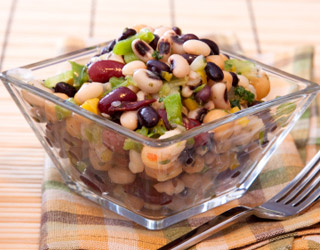
Soak & cook your own beans al-dente, for slowest release carbs.
See International table of glycemic index and glycemic load values: 2002. Below is a list of carbohydrates that have a low glycaemic load, or GL (GL = glycaemic index * grams of carbohydrate in the serving).


Non-nutritive sweeteners:


It's often claimed that non-nutritive sweeteners produce a cephalic phase insulin response. The mere anticipation of eating produces a cephalic phase insulin response. See How neural mediation of anticipatory and compensatory insulin release helps us tolerate food. An insulin response suppresses serum NEFAs, so it's not all bad.


Sugars and Sugar alcohols:


Fructose is not recommended for people with T2DM, as it "barges its way" into the liver via Glu-T5 and fructokinase. People with T2DM who have a high fasting serum glucose level almost certainly already have full liver glycogen stores, so adding to them isn't advisable. Whole fruits (not juices) are fine.
Lactose has a virtually zero GL, isn't very sweet and has/hasn't a laxative effect in large quantities (lactase-dependent). Heating lactose turns it into lactulose.
Lactulose has a virtually zero GI, is sweet and has a laxative effect in large quantities.
Galactose is not recommended, as large amounts may accelerate ageing.
D-mannose has a virtually zero GI, is sweet and doesn't have a laxative effect in large quantities. It can be used to treat urinary tract infections (UTIs) caused by e.coli, due to the fact that the kidneys filter it out of the blood and pass it out in the urine. Mannose in urine reduces the adhesion of e.coli to the inside wall of the urinary tract. See Intervening with urinary tract infections using anti-adhesives based on the crystal structure of the FimH-oligomannose-3 complex.
Trehalose has a virtually zero/moderate GI, is sweet and has/hasn't a laxative effect in large quantities (trehalase-dependent).

Lactitol has a virtually zero GI and has a laxative effect in large quantities.
Sorbitol has a virtually zero GI and has a laxative effect in large quantities.
Xylitol has a virtually zero GI, minty overtones and reduces dental plaque. However, it has a laxative effect in large quantities.
Erythritol has a virtually zero GI, minty overtones and is wee'ed-out like D-mannose, so it doesn't have a laxative effect in large quantities.


Starches:


Note: Tinned starches are usually overcooked, so cook your own. Don't overcook starches, as that makes them faster-absorbing. Al dente is best.

Gram dhal a.k.a. chana dal.
Long-grain rice. Refrigerating boiled rice for 24 hours lowers the GL, by forming resistant starch. See item 275 in the table in the first link.
New potatoes. Refrigerating boiled new potatoes for 24 hours lowers the GL a lot, by forming resistant starch. See item 605 in the table in the first link. You can boil old potatoes, but they're probably not as good.
Pearl barley.
Sweet corn.
Beans.
Chickpeas.
Lentils.
Peas.
Starchy nuts e.g. peanuts , cashews and chestnuts.
Vegetables.
Root vegetables.
Raw carrots.

If even low-GL carbs spike BG too much, this indicates severe IR in liver and/or skeletal muscle. See Insulin Resistance: Solutions to problems.

The above lists also apply to people with T1DM who are having difficulty keeping their blood glucose level between 3 and 7mmol/L.

Friday, 10 May 2013

Type 2 diabetes: between a rock and a hard place.

About 85% of type 2 diabetics have excessive visceral adiposity (belly fat). This post is about them.
Which is better - the rock or the hard place?


1) The rock:


This is serum glucose. People with type 2 diabetes can measure their own serum glucose. Eating carbohydrates makes serum glucose increase, the rate of increase being proportional to the glycaemic index and the magnitude of the increase being proportional to the grams of carbs consumed. By limiting the intake of dietary carbohydrates, large spikes in serum glucose can be avoided. The occasional spike above 7.8mmol/L (140mg/dL) doesn't hurt. It's spending long periods of time above 7.8mmol/L that's harmful (by glycation).

A low-carb diet (~150g/day of carbohydrate) halves serum glucose fluctuations compared to a higher-carb diet (~300g/day of carbohydrate). A very-low-carb diet (~75g/day of carbohydrate) further halves serum glucose fluctuations compared to the low-carb diet. This seems like an improvement, at first glance.


2) The hard place:


This is the invisible "elephant in the room", as it's not measured by doctors and people with type 2 diabetes can't measure it themselves. It's serum Non-Esterified Fatty Acids, or NEFAs (a.k.a. Free Fatty Acids, or FFAs). Serum NEFAs are high when fasting and fall after eating foods that raise serum insulin (carbs & certain proteins). People with type 2 diabetes and excessive visceral fat (belly fat) have higher-than-normal serum NEFAs due to adipocyte insulin resistance (IR). See Insulin Resistance: Solutions to problems.

Just like with serum glucose, there's nothing wrong with serum NEFAs going up & down. It's chronically-high serum NEFAs that's harmful (except during periods of caloric restriction). See Showing posts sorted by relevance for query NEFA "type 2 diabetes" .

See Fig. 1 in Lack of suppression of circulating free fatty acids and hypercholesterolemia during weight loss on a high-fat, low-carbohydrate diet. On a very-low-carb (less than 50g/day carbs) diet that's not calorie-restricted, serum insulin remains low all of the time. To insulin-haters, that sounds like a good thing. Unfortunately, it means that there is no insulin spike to suppress serum NEFAs by shifting the balance of NEFAs going in/coming out of fat cells. Serum NEFAs stay high all of the time, which is harmful.

Therefore, people who have type 2 diabetes and excessive visceral fat and who are permanently on a very-low-carb diet that's not calorie-restricted are harming themselves.

Monday, 29 April 2013

Not exactly rocket science, is it? Part 2

If there is a deficiency in "X", taking supplement "X" will correct the deficiency in "X".
∴ If problem "Y" is caused by a deficiency in "X", taking supplement "X" will fix problem "Y".

If there's no deficiency in "X", taking supplement "X" won't make any difference.
∴ If problem "Y" isn't caused by a deficiency in "X", taking supplement "X" won't fix problem "Y".

If a person spends a lot of time outdoors in skimpy clothing in sun that's higher than 45deg in the sky, it's highly likely that they won't be deficient in Vitamin D3. Therefore, supplementing with 5,000iu/day of Vitamin D3 won't highly likely do anything.

∴ If the above sun-worshipping person has type 2 diabetes, supplementing with 5,000iu/day of Vitamin D3 won't highly likely make any difference.

Not exactly...
Rocket Science!
There will be some people for whom all of the supplements & exercises that I recommend don't make any difference to their type 2 diabetes. Sorry about that. A low-carb (but not very-low-carb) diet will minimise your serum glucose level fluctuations without increasing your serum NEFA level excessively. See The problem with Diabetes.

Can supplements & exercise cure Type 2 diabetes?

Definitely, maybe!
From https://health-in-hand.co.uk/2013/03/24/supplements-for-the-non-supplement-takers/
According to Hyppönen and Power, in a large sample of the white British population born in 1958, 60.9% of subjects had serum 25(OH)D (the active metabolite of Vitamin D) of less than 75nmol/L in Summer & Autumn, and 87.1% had serum 25(OH)D of less than 75nmol/L in Winter & Spring. 75nmol/L ≡ 30ng/mL.

 From Hypovitaminosis D is associated with insulin resistance and β cell dysfunction, 2-hour post-load blood glucose level in an oral glucose tolerance test (OGTT) has a negative correlation with 25(OH)D concentration (Fig 1C). 25(OH)D concentration has a positive correlation with insulin sensitivity (Fig 2A). Therefore, 2-hour post-load blood glucose level in a OGTT has a negative correlation with insulin sensitivity.

"Extrapolation from the observations in the current study suggests that increasing 25(OH)D from 10 to 30 ng/mL can improve insulin sensitivity by 60%, from 3.8128 to 6.1176 (umol/L)·m-2·min-1·(pmol/L)-1. This improvement in insulin resistance could potentially eliminate the burden on cells and reverse abnormal glucose tolerance. Furthermore, the 60% improvement in insulin sensitivity that results from vitamin D treatment indicates that that treatment is more potent than either troglitazone or metformin treatment (54% and 13% improvement in insulin sensitivity, respectively). The modest effect of vitamin D on insulin sensitivity in individual persons may translate into a dramatic effect in the population as a whole because of the high prevalence of hypovitaminosis D, which, in a large population, carries an attributable risk for type 2 diabetes and the metabolic syndrome. Although a review of the literature suggests non-calcium-mediated effects, the underlying molecular mechanism remains to be elucidated."

As my 2-hour post-load blood glucose level in a OGTT became low (3.7mmol/L, from 8.7mmol/L in 2003) after supplementing with 5,000iu/day of Vitamin D3, this means that my insulin sensitivity became high. Therefore, I cured my pre-type 2 diabetes using supplements.

My fasting blood glucose level also fell from 6.8 mmol/L (> 7.0mmol/L = type 2 diabetes diagnosis) to 5.0mmol/L. I achieved this without taking any drugs for type 2 diabetes - not even Metformin, which I consider to be a safe & effective insulin-sensitiser, though it can cause gastric distress and B12 absorption issues, long-term. The supplements that I took had zero side-effects and merely corrected deficiencies.

Diabetes drugs cannot cure type 2 diabetes. However, supplements & exercise can cure type 2 diabetes, if the type 2 diabetes is caused by nutrient deficiencies and/or sedentary behaviour and if all pancreatic beta cells haven't been destroyed. Insulin injections can preserve pancreatic beta cells, while insulin resistance is being tackled. See Dr. Richard K Bernstein on insulin for type 2 diabetics, and some definitions.

Sadly, if there are no nutrient deficiencies and/or all pancreatic beta cells have been destroyed, supplements & exercise will not help.

Sunday, 28 April 2013

New treatment might put Type 2 diabetes in remission.

From:
https://www.ctvnews.ca/mobile/new-treatment-might-put-type-2-diabetes-in-remission-1.806064
"A new study by Toronto researchers on a new way to treat type 2 diabetes shows it may cause temporary remission of the disease in up to 75 per cent of patients.
 
The new treatment involves taking four shots of insulin -- the medication required by some diabetics to control blood sugar levels -- per day for just one month. This is a change from the usual treatment, which involves daily insulin shots over an extended period of time.

Patients develop diabetes when their pancreas can't produce enough insulin to lower blood sugar levels after meals. While medications can temporarily boost insulin production, many type 2 diabetics face a lifetime of daily insulin shots. Over time, patients with the disease can go on to suffer from a range of complications including blindness, heart disease, kidney problems and nerve damage.

Dr. Bernard Zinman, the director of the Leadership Sinai Centre for Diabetes and lead researcher of the study, explained how the new treatment works to CTV News. According to Zinman, by giving type 2 diabetics concentrated levels of insulin for a month early on in their disease, their pancreas, in effect, gets a "a break."

"The diabetes in essence goes away because their own pancreas now can make enough insulin," he said.

After the month on concentrated doses, patients are required to take another type of medication to "maintain" the remission, said Zinman.

Zinman said that the period of remission may eventually wear off, and so he sees the possibility of a future "top-up" treatment, which would last another month.

While the remission period can vary in patients, the prospect of improving pancreatic function is an exciting development in diabetes research, said Dr. Ravi Retnakaran, co-researcher of the study.

"This is a very novel and exiting way of treating diabetes that could have important implications," said Retnakaran.

For patients involved in the study, the treatment has had a major impact on their quality of life. Francoise Hebert was diagnosed with type 2 diabetes in November 2010. Seven months ago she enrolled in the study, and while she found the four daily insulin doses challenging, her blood sugar levels are now normal.

Hebert now happily tells people she "no longer has the disease," and enjoys knowing she's delayed any progression of diabetes-related complications.

"It feels fabulous," she said with a laugh. "It feels absolutely wonderful."

In addition to having her diabetes go into remission, Hebert says she's also learned how to eat better and hopes to eventually be able to get her weight under control.

Type 2 diabetes is primarily caused by an unhealthy diet and physical inactivity.

The research team at Mount Sinai Hospital hopes to have study results in a year or two, as well as more safety data on the medication."

Friday, 26 April 2013

Hypoglycaemic counter-regulation at normal blood glucose concentrations in patients with well controlled type-2 diabetes.

Hat tip to Graham of the Lowcarb Team. See Hypoglycaemic counter-regulation at normal blood glucose concentrations in patients with well controlled type-2 diabetes.

"Background

Intensive treatment to achieve good glycaemic control in diabetic patients is limited by a high frequency of hypoglycaemia. The glucose concentrations at which symptoms and release of counter-regulatory hormones takes place have not been studied in patients with well controlled type-2 diabetes.

Methods

We studied seven well controlled, non-insulin treated, type-2 diabetic patients (mean HbA1 [corrected according to Diabetes Control and Complications Trial] 7·4%, SD 1·0) and seven healthy controls matched for age, sex, and body mass index with a stepped hyperinsulinaemic hypoglycaemic glucose clamp. Symptoms, cognitive function, and counter-regulatory hormone concentrations were measured at each glucose plateau, and the glucose value at which there was a significant change from baseline was calculated.

Findings

Symptom response took place at higher whole-blood glucose concentrations in diabetic patients than in controls. Counter-regulatory release of epinephrine, norepinephrine, growth hormone, and cortisol showed a similar pattern—eg, at blood glucose concentrations of 3·8 mmol/L [SD 0·4] vs 2·6 [0·3] for epinephrine.

Interpretation

Glucose thresholds for counter-regulatory hormone secretion are altered in well controlled type-2 diabetic patients, so that both symptoms and counter-regulatory hormone release can take place at normal glucose values. This effect might protect type-2 diabetic patients against episodes of profound hypoglycaemia and make the achievement of normoglycaemia more challenging in clinical practice."

What the above study shows is that, in people with "well controlled" T2DM (mean HbA1c 7·4%, SD 1·0 is poor control. Less than 6% is good control), there is counter-regulatory release of adrenaline, noradrenaline, growth hormone and cortisol at normal blood glucose levels. This is bad, as it's unhealthy to have release of counter-regulatory hormones under normal living conditions.

EDIT: Graham posted this study in support of his belief that there is low/no cortisol etc secretion due to blood glucose not falling low enough. This study actually counters his belief, as blood glucose doesn't fall low enough due to excessive cortisol etc secretion!

Wednesday, 24 April 2013

Can very-low-carb diets impair your mental faculties?

I wanna tell you a story...

In 2006, I had a test done on my pituitary gland*, called an Insulin Shock Test. It was pretty much what it said on the tin. I laid on a hospital bed, I was injected with an overdose of insulin and I was monitored for blood glucose and growth hormone levels every 30 minutes.

My blood glucose fell and fell and fell and fell until it reached ~1.5mmol/L (~27mg/dL). What happened was interesting. I came out in a cold sweat and developed a tremor. Apart from that, I felt fine. The consultant in charge was chatting to me and I was chatting to him. Eventually, I was given a sandwich, a yoghurt and a banana to eat.

Some time later, when I had stopped sweating and shaking, the consultant returned and told me that I had become confused. My brain had ceased to function correctly due to a lack of blood glucose (the insulin had totally suppressed serum FFAs and ketones, so there were no other brain fuels available), but I was too mentally-impaired to know that I was mentally-impaired. As far as I was concerned, everything was fine & dandy. This is like the Dunning-Kruger effect.

Referring to Blood Glucose, Insulin & Diabetes, as blood glucose falls due to either starvation or a lack of dietary carbohydrate, insulin falls and glucagon rises, stimulating the liver to convert liver glycogen into glucose for export to the blood. Eventually, liver glycogen becomes depleted and blood glucose falls again. The pituitary gland notices this and secretes AdrenoCorticoTropic Hormone (ACTH) which stimulates the adrenal cortex to secrete cortisol. The adrenal glands are also stimulated to secrete adrenaline (a.k.a. epinephrine). Cortisol increases the conversion of amino acids and other substrates into glucose by the liver and kidneys. If blood glucose continues to fall, the pituitary gland secretes growth hormone (GH), which has an anti-insulin effect.

From https://anthonycolpo.com/boosting-growth-hormone-with-diet-training-fact-or-fiction-part-2/:-
"after the zero-carb phase, subjects reported symptoms of hypoglycemia that included weakness, irritability, mental confusion, nausea, hunger, cold sweating and disturbed co-ordination. GH levels were higher during exercise after the low-carb phase, but so too were levels of other fuel mobilizing hormones such as epinephrine, glucagon, and cortisol." Epinephrine, glucagon, and cortisol are stress hormones. Chronically-high blood levels of stress hormones disrupt sleep and cause irritable, aggressive behaviour.

Ethanol inhibits gluconeogenesis in the liver (possibly also in the kidneys) resulting in worse hypoglycaemia. Worse hypoglycaemia results in more ACTH & adrenaline secretion and worse hypercortisolaemia, which can adversely affect the hippocampus, impairing memory.

In conclusion, if you want to eat a very-low-carb diet, long-term:-1) Don't do much high-intensity exercise. See "Funny turns": What they aren't and what they might be.
2) Don't drink much (if any) booze.

*My pituitary gland failed the test by secreting only 40% the amount of GH that it was supposed to. For six months, I was given GH to inject using a special pen with a 8mm x 0.3mm needle. By the end of the six month trial, I had perfected the art of painless injection. The trial was discontinued due to lack of any noticeable benefit (17 days supply of GH @0.3mg/day cost £120!).

Type 2 diabetes in the UK.

From Insulin usage in type 2 diabetes mellitus patients in UK clinical practice: a retrospective cohort-based analysis using the THIN database:-

"Importantly, this analysis has been conducted using routine data from UK clinical practice, which allows an insight into how patients are managed in current UK practice. In summary, this study demonstrates a persisting delay both in oral therapy escalation and insulin initiations in patients with type 2 diabetes, with a relative reduction in the effectiveness of oral therapy escalation. There is an apparent threshold HbA1C of > 8.5% beyond which additional oral therapy in routine practice appears unlikely to achieve an HbA1C target ≤ 7.0%.
This study thus highlights the need for more timely escalation of glucose-lowering therapy, including insulin initiation, in order to limit unnecessary patient exposure to hyperglycaemia and associated serious consequences, such as macro-vascular and micro-vascular complications."

An HbA1C of 7.0% still results in macro-vascular and micro-vascular complications. If someone develops type 2 diabetes in the UK, the NHS isn't going to save them. They have to save themselves.

See also Having Diabetes and Car Insurance and Applying for a Driving Licence and Informing the DVLA. Basically, developing type 2 diabetes in the UK sucks.

People who have Impaired Glucose Tolerance need to take action to prevent their condition from deteriorating into full-blown Type 2 diabetes. See https://nigeepoo.blogspot.co.uk/search/label/Diabetes.

Low-glycaemic diet seen to reverse diastolic dysfunction of diabetes.

From https://www.medscape.com/viewarticle/802947?nlid=30763_1301&src=wnl_edit_dail (Medscape log-in required):-

"Of 32 overweight or obese diabetic patients (mean body-mass index, 34) without cardiac disease who were engaged in a "rehabilitation program in order to lose weight" that included two hours of supervised aerobic exercise per day, half followed a low-glycemic diet (25% carbohydrate, 45% fat, 30% protein) and the other half a low-fat diet (55% carbohydrate, 25% fat, and 20% protein) for three weeks. The diets provided the same amount of calories. Those on the low-fat diet then switched to the low-glycemic diet for an additional two weeks"

"....the two diets led to about the same declines in weight and waist circumference..."

The diet was 25% carbohydrate, 45% fat, 30% protein.
It was a low-carbohydrate/low-glycaemic load diet.
It was not a very-low-carb diet.

Tuesday, 23 April 2013

Weird filters, Part 2.

Here's that weird picture again.
Why is it that some people see the world through weird cognitive bias filters? It makes discussion with them impossible, as what I write is remixed with weird filters into something completely different. They then argue against something completely different, not what I wrote. This is the classic Straw Man argument.

Here are some more examples of remixing with weird filters:-

"I can eat whatever I want" is remixed into "I can eat as much as I want". I actually meant "there are no banned foods".

"Inject some insulin" is remixed into "Shoot-up insulin to cover the 400g of carbs that I never even mentioned!"

To all intents & purposes, I had T2DM. Another 0.2mmol/L on my fasting serum glucose and I would have been diagnosed as having T2DM. As my fasting serum glucose was slowly increasing, it would have soon gone over 7.0mmol/L, had I not got lucky and fixed the underlying problem.

In January 2003, I had impaired Glucose Tolerance (fasting serum glucose = 6.8mmol/L on one OGTT, and 2 hours post-75g glucose load serum glucose = 8.7mmol/L on another OGTT). A sandwich used to send me to sleep.

By September 2008, I had normal Glucose Tolerance (fasting serum glucose = 5.0mmol/L & 2 hours post-75g glucose load serum glucose = 3.7mmol/L on the same OGTT). I also no longer suffered from hyperinsulinaemic drowsiness. I was approximately the same weight that I was in 2003, so the improvement was not due to weight loss.

P.S. Information about ways to tackle Insulin Resistance can be found in Insulin Resistance: Solutions to problems.

N.B. If someone has a valid medical reason for being on a very-low-carb or ketogenic diet, that's fine by me. I don't think that it's necessary for people with T2DM to be on a very-low-carb or ketogenic diet. In fact, eating more carbohydrate allowed Jason Sandeman to reduce his insulin dose for good BG control.

Monday, 22 April 2013

Dr. Richard K Bernstein on insulin for type 2 diabetics, and some definitions.

Dr. Richard K Bernstein:-


Dr. Richard Bernstein, the world's leading low-carb diabetologist, says in Diabetes: The Basics:-
"Many people (including the parents of diabetic children) view having to use insulin as a last straw, a final admission that they are (or their child is) a diabetic and seriously ill. Therefore they will try anything else - including things that will burn out their remaining beta cells - before using insulin. Many people in our culture have the notion that you cannot be well if you are using medication. This is nonsense, but some patients are so convinced that they must do things the “natural” way that I practically have to beg them to use insulin, which is as “natural” as one can go. In reality, nothing could be more natural. Diabetics who still have beta cell function left may well be carrying their own cure around with them - provided they don’t burn it out with high blood sugars and the refusal to use insulin."

Some definitions:-

From Low-carbohydrate diet:-
"The term "low-carbohydrate diet" is generally applied to diets that restrict carbohydrates to less than 20% of caloric intake, but can also refer to diets that simply restrict or limit carbohydrates."
A typical woman consumes ~2000kcals/day. A typical man consumes ~2,500kcals/day. Therefore...

Very-low-carb diet = <10% energy from carbs ≡ <~50 or ~62.5g carbs/day.
Low-carb diet = <20% energy from carbs ≡ <~100 or ~125g carbs/day.
"Healthy eating" = >55% energy from carbs ≡ >~275 or ~344g carbs/day.

Monday, 7 January 2013

It’s the Calories, Stupid.

I thought I'd mark my return to blogging by taking the piss out of a certain Diet Doctor for his post It’s the Insulin, Stupid, who takes (and tweaks) Fig 7A from Hyperinsulinemia Drives Diet-Induced Obesity Independently of Brain Insulin Production.

At first glance, Fig 7A looks like a CIH believer's dream come true (apart from the words "High Fat Diet").

Hyperinsulinemia → Obesity.

Obesity is caused by too much insulin. Game, Set and Match to insulin.

Not so fast! Let's take a look at the rest of Fig 7.


Figure 7. Revisiting the Current Model of Obesity and Type 2 Diabetes(A) The most widely accepted model of the pathogenesis of obesity and type 2 diabetes posits that a high-fat diet leads to obesity and insulin resistance (there is debate about the relative order and causality of these). In this widely held view, insulin resistance then leads to hyperinsulinemia, which is followed by β cell exhaustion, and then type 2 diabetes. The accepted model is incompatible with our results that put the insulin hypersecretion genetically upstream of obesity.(B) Our data support a model whereby insulin levels must be kept low to maintain energy expenditure in white adipose tissue via the expression of Ucp1. Our data do not address the order of subsequent events after obesity (outside the yellow box), such as insulin resistance and/or type 2 diabetes, since they were not observed in our studies. In other words, the effects of insulin gene dosage on obesity are independent of sustained changes in glucose homeostasis or insulin resistance.

↑ Peripheral Hyperinsulinemia → ↓ Uncoupling Proteins (WAT) → ↓ Energy Expenditure → ↑ Obesity.

Obesity is caused by a reduction in energy expenditure in these mice. Game, Set and Match to The Energy Balance Equation. It’s the Calories, Stupid. In these mice, energy expenditure is strongly influenced by insulin levels. In humans, not a lot. In humans, insulin can act as a stimulant or a sedative.

I'm not an insulin denier as is obvious from my other blog posts. I'm still restricting my carbohydrate intake to ~125g/day from whole foods.

I'm not a food reward denier. I've been using food reward principles to lose weight.

This post will probably annoy some people. Before wasting your time writing a comment, please read my Moderation Policy.