Wednesday, 15 May 2013

What to do if subjected to a Denial of Service attack.

A couple of weeks ago, I lost internet access for about 30 mins due to a Denial of Service (DoS) attack.
I feel honoured that I've annoyed someone on the internet so much that they spent time and effort DoS attacking me!

Brute-force attacks from individuals are difficult, as my downlink speed is much faster than most people's uplink speed. To mount an effective brute-force attack requires multiple computers infected with a trojan. This is known as a Distributed Denial of Service (DDoS) attack and requires a lot of computer knowledge.

A much simpler approach is the SYN flood attack. I believe that I was subjected to one of these, as on rebooting, I temporarily had internet access but lost it after a few seconds when all of the available connections on my pooter became "half-open".

To defeat such an attack is simple. All that you have to do is harden the TCP/IP stack. See also https://msdn.microsoft.com/en-us/library/aa302363.aspx and https://www.pctools.com/guides/registry/detail/1237.

1-2-3 Magic: effective discipline for children 2-12.

It works for adults, too!
Now that's Magic!
Hat-tip to Jason Sandeman for mentioning this ages ago in reference to someone who was behaving badly on the internet. I did some research into the method and was impressed by how clever it is.

It relies on the parent having an "Ultimate Deterrent", i.e. a punishment that's so horrible, a child won't risk suffering it more than once, but which causes no physical, mental or emotional harm (e.g. the loss of something precious, including a single meal). It also relies on the parent actually using the "Ultimate Deterrent", as failing to do so results in a total loss of credibility.

Having explained to the child the "Ultimate Deterrent" that will happen if the child fails to comply with the request by a count of 3, the parent then gives the child time to comply by counting 1 . . . 2 . . . 3. If, by the time 3 is reached, the child hasn't complied, the "Ultimate Deterrent" is dealt.

Hopefully, the "Ultimate Deterrent" is so horrible, the child won't risk suffering it more than once. Job done!

See also 1-2-3 Magic: Effective Discipline for Children 2-12 (Google Books).

Sunday, 12 May 2013

Disqus is da bomb!

I'm the small yellow sphere with a big grin.
That's me, that is.
Disqus deletes comments from Anonymous commenters that contain links (clickable and plain text) without putting them in the Spam folder. I've been flooded with these, recently. I only get a Blogger notification email for my information, which I delete.

I can Whitelist trusted commenters, so their comments appear immediately without me having to moderate them. Deep Joy!

Oops, I did it again! Part n+1.

After a week of relative peace and quiet (I had viral laryngitis), the world groaned once again.

Last night, RoadRunner played at The Falkners Arms, Fleet. I asked the lead singer if I could have a go. I got to do the backing harmonies & other vocals on Mustang Sally. No pictures or videos were taken, so here's a picture of me performing with Jukebox at the beginning of March, instead.
That seemed to go well.

Saturday, 11 May 2013

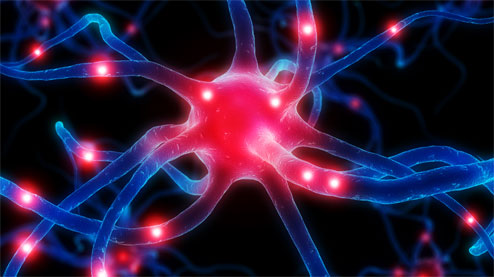
Type 2 diabetes: your good signalling's gonna go bad.

A little bit of Tammy Wynette.


Good signalling:

There's a famine. You've got nothing to eat. Your body's glycogen stores have just run out. What happens next? As food intake is zero, serum insulin level is minimised, so lipolysis (fat mobilisation) is maximised. Serum NEFAs are maximised. High serum NEFAs provides fuel for tissues that utilise NEFAs (e.g. skeletal muscle) and a "stop utilising glucose!" signal, in conjunction with low serum insulin.

High serum NEFAs and low serum insulin increase ketogenesis in the liver, to give the parts of the brain that can utilise ketones an alternative choice of fuel, to reduce glucose utilisation to a minimum. Ditto for nerves. Glucose utilisation must be minimised during a famine, as it's generated by the liver & kidneys from glucogenic amino acids, obtained from lean body mass (LBM) by hypercortisolaemia.

Gone bad:

You're a type 2 diabetic with a fat belly. For reasons that I don't fully understand (better blood supply? close proximity to liver?), belly fat deposits spew NEFAs into the blood at a much higher rate than arm, boobs, love-handles, bum & thigh fat deposits. On a very-low-carb diet (less than 50g/day carbs), serum insulin level is minimised, so lipolysis (fat mobilisation) is maximised. Serum NEFAs are maximised. High serum NEFAs provides fuel for tissues that utilise NEFAs (e.g. skeletal muscle) and a "stop utilising glucose!" signal, in conjunction with low serum insulin.

A type 2 diabetic with a fat belly has underlying insulin resistance, due to over-full muscle, adipose and/or liver cells (making the liver spew glucose into the blood at too fast a rate, and the muscles & adipocytes take it out of the blood at too slow a rate). The very-low-carb diet makes the underlying insulin resistance worse and high serum NEFAs in a milieu of caloric sufficiency or excess wreak havoc. Serum glucose level increases. Serum LDL-c level increases. Serum TG level increases. Serum just about everything level increases, except for serum HDL-c level, which decreases.

Marketing Food to Children: Anna Lappe at TEDxManhattan 2013.

As per title.

We have free will, huh?

Diabetes: which are the safest carbohydrates?

In my previous post, I stated that people with T2DM should eat ~150g/day of carbohydrate.
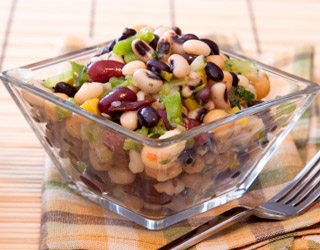
Soak & cook your own beans al-dente, for slowest release carbs.
See International table of glycemic index and glycemic load values: 2002. Below is a list of carbohydrates that have a low glycaemic load, or GL (GL = glycaemic index * grams of carbohydrate in the serving).


Non-nutritive sweeteners:


It's often claimed that non-nutritive sweeteners produce a cephalic phase insulin response. The mere anticipation of eating produces a cephalic phase insulin response. See How neural mediation of anticipatory and compensatory insulin release helps us tolerate food. An insulin response suppresses serum NEFAs, so it's not all bad.


Sugars and Sugar alcohols:


Fructose is not recommended for people with T2DM, as it "barges its way" into the liver via Glu-T5 and fructokinase. People with T2DM who have a high fasting serum glucose level almost certainly already have full liver glycogen stores, so adding to them isn't advisable. Whole fruits (not juices) are fine.
Lactose has a virtually zero GL, isn't very sweet and has/hasn't a laxative effect in large quantities (lactase-dependent). Heating lactose turns it into lactulose.
Lactulose has a virtually zero GI, is sweet and has a laxative effect in large quantities.
Galactose is not recommended, as large amounts may accelerate ageing.
D-mannose has a virtually zero GI, is sweet and doesn't have a laxative effect in large quantities. It can be used to treat urinary tract infections (UTIs) caused by e.coli, due to the fact that the kidneys filter it out of the blood and pass it out in the urine. Mannose in urine reduces the adhesion of e.coli to the inside wall of the urinary tract. See Intervening with urinary tract infections using anti-adhesives based on the crystal structure of the FimH-oligomannose-3 complex.
Trehalose has a virtually zero/moderate GI, is sweet and has/hasn't a laxative effect in large quantities (trehalase-dependent).

Lactitol has a virtually zero GI and has a laxative effect in large quantities.
Sorbitol has a virtually zero GI and has a laxative effect in large quantities.
Xylitol has a virtually zero GI, minty overtones and reduces dental plaque. However, it has a laxative effect in large quantities.
Erythritol has a virtually zero GI, minty overtones and is wee'ed-out like D-mannose, so it doesn't have a laxative effect in large quantities.


Starches:


Note: Tinned starches are usually overcooked, so cook your own. Don't overcook starches, as that makes them faster-absorbing. Al dente is best.

Gram dhal a.k.a. chana dal.
Long-grain rice. Refrigerating boiled rice for 24 hours lowers the GL, by forming resistant starch. See item 275 in the table in the first link.
New potatoes. Refrigerating boiled new potatoes for 24 hours lowers the GL a lot, by forming resistant starch. See item 605 in the table in the first link. You can boil old potatoes, but they're probably not as good.
Pearl barley.
Sweet corn.
Beans.
Chickpeas.
Lentils.
Peas.
Starchy nuts e.g. peanuts , cashews and chestnuts.
Vegetables.
Root vegetables.
Raw carrots.

If even low-GL carbs spike BG too much, this indicates severe IR in liver and/or skeletal muscle. See Insulin Resistance: Solutions to problems.

The above lists also apply to people with T1DM who are having difficulty keeping their blood glucose level between 3 and 7mmol/L.

Friday, 10 May 2013

Type 2 diabetes: between a rock and a hard place.

About 85% of type 2 diabetics have excessive visceral adiposity (belly fat). This post is about them.
Which is better - the rock or the hard place?


1) The rock:


This is serum glucose. People with type 2 diabetes can measure their own serum glucose. Eating carbohydrates makes serum glucose increase, the rate of increase being proportional to the glycaemic index and the magnitude of the increase being proportional to the grams of carbs consumed. By limiting the intake of dietary carbohydrates, large spikes in serum glucose can be avoided. The occasional spike above 7.8mmol/L (140mg/dL) doesn't hurt. It's spending long periods of time above 7.8mmol/L that's harmful (by glycation).

A low-carb diet (~150g/day of carbohydrate) halves serum glucose fluctuations compared to a higher-carb diet (~300g/day of carbohydrate). A very-low-carb diet (~75g/day of carbohydrate) further halves serum glucose fluctuations compared to the low-carb diet. This seems like an improvement, at first glance.


2) The hard place:


This is the invisible "elephant in the room", as it's not measured by doctors and people with type 2 diabetes can't measure it themselves. It's serum Non-Esterified Fatty Acids, or NEFAs (a.k.a. Free Fatty Acids, or FFAs). Serum NEFAs are high when fasting and fall after eating foods that raise serum insulin (carbs & certain proteins). People with type 2 diabetes and excessive visceral fat (belly fat) have higher-than-normal serum NEFAs due to adipocyte insulin resistance (IR). See Insulin Resistance: Solutions to problems.

Just like with serum glucose, there's nothing wrong with serum NEFAs going up & down. It's chronically-high serum NEFAs that's harmful (except during periods of caloric restriction). See Showing posts sorted by relevance for query NEFA "type 2 diabetes" .

See Fig. 1 in Lack of suppression of circulating free fatty acids and hypercholesterolemia during weight loss on a high-fat, low-carbohydrate diet. On a very-low-carb (less than 50g/day carbs) diet that's not calorie-restricted, serum insulin remains low all of the time. To insulin-haters, that sounds like a good thing. Unfortunately, it means that there is no insulin spike to suppress serum NEFAs by shifting the balance of NEFAs going in/coming out of fat cells. Serum NEFAs stay high all of the time, which is harmful.

Therefore, people who have type 2 diabetes and excessive visceral fat and who are permanently on a very-low-carb diet that's not calorie-restricted are harming themselves.

Thursday, 9 May 2013

The danger of science denial - Michael Specter.

As per title.

“The good thing about science is that it’s true whether or not you believe in it.” Neil deGrasse Tyson.

Wednesday, 8 May 2013

Greased lightning.

What video could it possibly be?

I've just had the RAM in my pooter quadrupled to 8GB and had the paging file turned off. Oh, wow!

Fun with coupled-pair tuned circuits.

I'm not being rude! It's a couple of these, uh, coupled together...
LC Tuned Circuit.
A coupled-pair tuned circuit has a frequency response something like...
Passes signals at fo. Attenuates signals at other frequencies.
One of my missions was to design a frequency-agile (capable of changing frequency in less than 1ms) coupled-pair tuned circuit that maintained a constant width (Δf) as fo varied.

As Q = fo/Δf, for Δf to remain constant requires fo/Q to remain constant i.e. Q must vary in proportion with fo.

In the top diagram, inserting a resistance of value "R" in series with the L and the C sets the Q.

Q = ωL/R, where ω = 2*π*fo. For Q to vary in proportion with fo requires R to be constant.

This was achieved using wideband RF transformers to transform the source & load impedances from 50Ω down to a suitable "R" value. Here endeth today's trip around my brain.

Tuesday, 7 May 2013

PROLONGED MEAT DIETS WITH A STUDY OF KIDNEY FUNCTION AND KETOSIS.

BY WALTER S. MCCLELLAN AND EUGENE F. Du BOIS.
It's the 1 year study on Vilhjalmur Stefansson and K. Andersen at Bellevue Hospital.
Vilhjalmur Stefansson
See https://www.jbc.org/content/87/3/651.full.pdf The reason why I'm posting this is because of what Stefansson and Andersen drank. I was under the impression that the men drank water only. That was not the case. They drank coffee, black tea, meat broths and water. Black tea is high in tannins, which bind somewhat to haem iron and very strongly to non-haem iron.

Therefore, if you like to eat lots of red meat but you don't like your greens (not even a tablespoonful of spinach), drink strong black tea or eat foods rich in phytates and/or calcium. Vitamin E supplements also help. See Red meat and colon cancer: should we become vegetarians, or can we make meat safer?

Monday, 6 May 2013

Sun exposure doesn't increase the risk of getting Malignant Melanoma. It probably reduces it.

Wait, WHAT?!?! I've done it again!
Here comes the sun, doo doo doo doo.

According to Does solar exposure, as indicated by the non-melanoma skin cancers, protect from solid cancers: vitamin D as a possible explanation,
"Vitamin D production in the skin seems to decrease the risk of several solid cancers (especially stomach, colorectal, liver and gallbladder, pancreas, lung, female breast, prostate, bladder and kidney cancers). The apparently protective effect of sun exposure against second primary cancer is more pronounced after non-melanoma skin cancers than melanoma, which is consistent with earlier reports that non-melanoma skin cancers reflect cumulative sun exposure, whereas melanoma is more related to sunburn."

See also Is Vitamin D Shooting Me in the Foot?

Insufficient sun exposure increases the risk of getting cancer. This isn't surprising, as cancer cells are constantly being created in our bodies due to defects occurring in DNA etc. Our immune system constantly destroys them. Only when cancer cells manage to evade the immune system (by pure chance) does cancer develop. Cells & an immune system weakened by Vitamin D insufficiency is asking for trouble. See Kelsey Nicole Olson.

Excessive sun exposure increases the risk of getting cancer.

Chronically-excessive sun exposure (outdoor workers) increases the risk of getting
Basal Cell Carcinoma & Squamous Cell Carcinoma. These skin cancers are rarely malignant and rarely fatal.

Acutely-excessive sun and/or UVA exposure (holidaymakers & tanning booth users) increases the risk of getting Melanoma. This skin cancer is always malignant, and often fatal.

Combining insufficient sun exposure for 50 weeks of the year with acutely-excessive sun exposure for 2 weeks of the year is really asking for trouble. What makes the situation even worse is that Vitamin D insufficiency makes the skin burn more easily.

I take 5000iu/day of Vitamin D3 and my skin is far more resistant to burning than it used to be. I can go for long drives on a sunny day with the top down and not burn. My face goes pink, but that's all.

I've already read on Facebook about friends burning themselves to a crisp in the wishy-washy May English sun. It's not sun exposure that increases the risk of getting Malignant Melanoma. It's ignorance, apathy, stupidity and/or bad luck.

Be careful out there!

See also Vitamin D

Fun with LEDs.

Warning! Techy, nerdy stuff.
Pretty!
When I were a lad (!), I remember the invention of the Light-Emitting Diode (LED). They were originally made out of Gallium (Ga) & Arsenic (As) instead of Germanium (Ge and now I'm really showing my age!) and Silicon (Si). Gallium & Arsenic are used to "dope" Silicon to form P & N regions respectively (Gallium has 3 electrons in its outer shell & Arsenic has 5. Germanium & Silicon have 4).

GaAs red LEDs weren't very bright. By adding Aluminium, Indium, Phosphorus, Nitrogen etc, new colours & higher-efficiency old colours were invented. Orange. Yellow. Green. Brighter green. Even brighter green. Really bright green. I thought that blue LEDs would never be invented. Wrong!

Nowadays, OLEDs are so efficient that they can be used for lighting and they are more efficient and longer-lasting than CFLs. I thought that OLEDs would never catch on. Wrong! The superb display on my Samsung phone uses AMOLED technology. But anyway...

What I found interesting about GaAs red LEDs was their I-V characteristic.
Pretty techy!
Over a wide range of currents, the voltage is ~1.75V. The steep slope means that the dynamic resistance (δV/δI) is very low. I thought to myself "Hmmm, voltage regulator!" Zener diodes are usually used as voltage regulators, but they are very noisy. A forward-biased P/N junction produces less thermal noise than a resistor with the same value as the dynamic resistance of the P/N junction. As the voltage (~1.75V) is temperature-dependent (-2mV/ºC), the relative temperature variation of a red GaAs LED is less than that of a Silicon diode (~0.7V when biased on).

I used two "strings" of red GaAs LEDs as an ultra-low-noise voltage limiter in a high-power oscillator using LDMOS MOSFETs that had just been invented by Mullard (which later became Philips). It produced 1W (+30dBm) over a frequency range of 30 to 88MHz and had a Carrier to Noise Ratio (C/N) of >190dBc/Hz @10% frequency offset. Typical RF Signal Generators of that era had a C/N of ~145dBc/Hz at that offset.

I hope that you've enjoyed this little tour around my brain!

Sunday, 5 May 2013

Ketogenic diets - when they're not ketogenic, Part 2.

Continued from Ketogenic diets - when they're not ketogenic.

If I said that Eskimos eating their traditional diet were eating processed carbs, what would you think?
Structure of the chitin molecule, showing two of the N-acetylglucosamine units that repeat to form long chains in β-1,4 linkage.
Eskimos eat marine mammals & oily fish, also any edible vegetation that they can find. Marine mammals eat oily fish which in turn eat crustaceans. Crustaceans have an exoskeleton made of Chitin. Chitin has a structure similar to cellulose and a function similar to keratin (hair & fingernails/claws). Humans cannot digest chitin unless it's first powdered and hydrolysed. Certain fish and bacteria are able to digest it using chitinases.

If Eskimos consume the stomach contents of the animals that they kill for food (they usually consume the whole animal, sometimes after leaving it for a long time to auto-digest), there is likely to be a significant amount of pre-digested chitin in their diets. Freshly-killed animals also contain glycogen. Therefore, Eskimos eating a traditional diet ate more carbohydrate than you would expect, which would reduce/eliminate ketogenesis.

Then there's the protein... See STUDIES ON THE METABOLISM OF ESKIMOS.

Why do domestic cats eat grass?

From When My Cats Are Eating The Grass.
Keep off the grass!
Outdoor cats eat rodents & birds. Therefore, outdoor cats eat processed grains, seeds and nuts. Wait, WHAT?!?! Rodents & birds are grain, seed and nut-eaters, though some birds eat worms. Therefore, domestic cats are eating grains, seeds and nuts that have been chewed/pecked and swallowed i.e. processed grains, seeds and nuts.

This may be one reason why domestic cats chew grass - to get magnesium from the chlorophyll to "neutralise" the iron from the meat. Another reason is to vomit up indigestible parts of rodents & birds that the cat ate, including fur-balls. They might also be trying to get Folic acid.

Green vegetables, red meat and colon cancer: chlorophyll prevents the cytotoxic and hyperproliferative effects of haem in rat colon.

I've just had a long and fascinating telephone conversation with Jay Bryant. This has inspired me to write three new blog posts. This is the first. There's a recurring theme.
Om, nom, nom!
Lions are obligate carnivores, which means that they must eat meat. Wild lions also eat processed carbohydrates. Wait, WHAT?!?! The word "processed" has bad connotations. However, it merely means "having undergone a process", without specifying what the process is.

Lions tear open the stomachs of their prey. The contents spill out and some are consumed by the lions. What do herbivores eat? Green vegetable matter. Being chewed by the molars of a herbivore is technically-speaking food processing. So, on to the study in the title.

See Green vegetables, red meat and colon cancer: chlorophyll prevents the cytotoxic and hyperproliferative effects of haem in rat colon.

"In both studies haem increased cytotoxicity of the colonic contents approximately 8-fold and proliferation of the colonocytes almost 2-fold. Spinach or an equimolar amount of chlorophyll supplement in the haem diet inhibited these haem effects completely. Haem clearly inhibited exfoliation of colonocytes, an effect counteracted by spinach and chlorophyll. Finally, size exclusion chromatography showed that chlorophyll prevented formation of the cytotoxic haem metabolite. We conclude that green vegetables may decrease colon cancer risk because chlorophyll prevents the detrimental, cytotoxic and hyperproliferative colonic effects of dietary haem."

It's a rat study (experiments on humans are unethical), but there's Heme and Chlorophyll Intake and Risk of Colorectal Cancer in the Netherlands Cohort Study. Finally, there's Associations between Red Meat and Risks for Colon and Rectal Cancer Depend on the Type of Red Meat Consumed.

So, always eat greens with your red meat. A tablespoonful of cooked spinach is all you need.

EDIT: I just found Red meat and colon cancer: should we become vegetarians, or can we make meat safer?

"For instance, promotion of colon carcinogenesis in rats by cooked, nitrite-treated and oxidized high-heme cured meat was suppressed by dietary calcium and by α-tocopherol, and a study in volunteers supported these protective effects in humans."

As dietary calcium binds to haem iron, this suggests that other binding agents would work e.g. phytates (in whole grains) and tannins (in tea).

α-tocopherol is a fat-based antioxidant. Vitamin E supplements contain D α-tocopherol.

Friday, 3 May 2013

Foxy vs Internet Exploder - which is better?

Google Image search never fails to deliver...
First Google Image search result for "Foxy vs Exploder"
So, which is better? Firefox or Internet Explorer?

The answer is... It all depends! Drag the mouse pointer over the white area to reveal the text, unless you've come here via Paleobuzz, in which case you already know the answer!

I love Firefox. However, sometimes it drives me bat-sh*t crazy! Last night, I tried to use it to edit some html on my blog (to install the Disqus code) and the memory used by it went up and up and up, until my pooter started using pagefile.sys. Hard disk is about 1,000,000 times slower than RAM, so when pagefile.sys kicks-in, my pooter becomes as useful as a chocolate tea-pot.

I'm going to max-out my RAM and disable pagefile.sys, but my local shop hasn't got the RAM in, yet. I could use Internet Explorer to edit the html on my blog in the meantime, but I'm going to wait for the RAM upgrade and give Firefox another go.

Thursday, 2 May 2013

Tribute to mum.

My sister and I have agreed that I will buy a potted King James Black Mulberry tree for the garden area of Acacia Lodge Care Home.
King James Black Mulberry tree
The root ball will be left in the pot, to stop the tree from growing too large. Mum's ashes will be placed below the roots of the tree. There will be a plaque saying "Laurel's Tree", or something similar.

Respiratory Exchange Ratio (RER) explained.

Science!
What the heck is this?
RER has been mentioned a few times on this blog. By measuring the rate of CO2 exhaled and the rate of O2 inhaled, it's possible to work out how many kcals/min the body is generating from food at any instant and from what fuel mixture.

An RER of 0.700 means that 100% of energy is being generated from fat.
An RER of 1.000 means that 100% of energy is being generated from carbohydrate aerobically.
An RER of >1.000 means that 100% of energy is being generated from carbohydrate, some aerobically and some anaerobically.

How does this work? Fats are an ester of fatty acids + glycerol. Acid + Alcohol = Ester + Water.

Saturated fatty acids (the easiest type to calculate) have the generic formula CH3(CH2)nCOOH, where n can be from 0 to 16. Here are some saturated fatty acids and their n values:- Acetic (0), Propionic (1), Butyric (2), Lauric (10), Myristic (12), Palmitic (14) and Stearic (16). The total number of carbon atoms in each fatty acid is n+2. Stearic acid is mostly CH2s, so I'll approximate fat to n(CH2).

n(CH2) + 3/2n(O2) = n(CO2) + n(H2O) + Heat. The ratio of CO2 to O2 is 2/3, so RER = 0.666.

As fats contain things other than CH2 (e.g. glycerol CH2OHCHOHCH2OH), this raises RER to 0.700. Burning protein gives an RER = 0.800.

Carbohydrates have the generic formula n(CH2O), where n = 6 for glucose.

n(CH2O) + n(O2) = n(CO2) + n(H2O) + Heat. The ratio of CO2 to O2 is 1.000, so RER = 1.000.

So how on earth can Eskimos have an RER = 0.600? I have a theory. When hydrogen is oxidised, water only is produced. There is no CO2, so RER = 0.000. Therefore, if some hydrogen was being burned (by gut bacteria, say), this could result in RER falling below 0.700. Maybe...